
In this topic
What to be able to answer
- Know General Elections, first past the post, coalitions and by-elections.
- Know who can vote and stand for office, how to register, and what happens on polling day.
- Know how to contact your representatives and visit the parliaments.
- Know which powers stay with Westminster, and match each devolved body to its building, members, voting system and powers.
Learn
Elections, voting and the devolved governments of Wales, Scotland and Northern Ireland
How MPs are elected
The UK is a parliamentary democracy: each constituency elects one MP to the House of Commons.
- 1
General Election
5 yearsHeld at least every five years. Voters in each constituency elect their Member of Parliament (MP).
- 2
First past the post
In each constituency, the candidate who gets the most votes is elected.
Elected MP - 3
A government forms
The party that wins the majority of constituencies usually forms the government. If the opposition wins, its leader usually becomes Prime Minister.
- 4
No majority? A coalition
Two parties may join together to form a coalition. After the 2010 General Election, the Conservatives and the Liberal Democrats formed one.
- 5
By-election
If an MP dies or resigns, a fresh election is held in that constituency.
Voting and standing for office
From the electoral register to the ballot box.
Who can vote
18+- Adult UK citizens, and Commonwealth and Irish citizens living in the UK, can vote in all public elections.
- The voting age of 18 was set in 1969.
- EU citizens living in the UK cannot vote in General Elections.
Get on the electoral register
- You can only vote if your name is on the electoral register. Register through your local council's electoral registration office.
- The register is updated every year in September or October.
- In Northern Ireland, everyone entitled to vote fills in their own form: 'individual registration'.
Poll card
- Before an election you are sent a poll card. It tells you where your polling station (a polling place in Scotland) is and when the election will take place.
Polling day
- Polling stations are open from 7am to 10pm. Staff ask for your name and address. In Northern Ireland you also show photographic ID.
- Fill in your ballot paper privately in a polling booth, then put it in the ballot box. No one has the right to make you vote for a particular candidate.
- If it is hard to get to a polling station, register for a postal ballot.
Standing for office
18+- Most citizens of the UK, the Irish Republic or the Commonwealth aged 18 or over can stand for public office.
- Exceptions include members of the armed forces, civil servants and people found guilty of certain criminal offences.
- Members of the House of Lords cannot stand for the House of Commons, but can stand for any other public office.
All elected members have a duty to serve and represent their constituents. You can get contact details for all your representatives and their parties from your local library and from www.parliament.uk; MPs, Members of the Senedd (MSs) and Members of the Scottish Parliament (MSPs) are also listed in The Phone Book. You can contact MPs by letter or telephone at their constituency office or at their office in the House of Commons. Many MPs, MSs and MSPs also hold regular local ‘surgeries’, often advertised in the local newspaper, where constituents can go in person to talk about issues of concern.
The public can listen to debates in the Palace of Westminster from the public galleries of both the House of Commons and the House of Lords. You can write to your local MP in advance to ask for tickets, or queue on the day at the public entrance. Entrance is free. Queues for the House of Commons can be long, and it is usually easier to get into the House of Lords.
Since 1997, some powers have been devolved from the central government to give people in Wales, Scotland and Northern Ireland more control over matters that directly affect them. There has been a Welsh Assembly (now called the Senedd) and a Scottish Parliament since 1999. There is also a Northern Ireland Assembly, although this has been suspended on a few occasions.
Where each parliament sits
The UK Parliament is at Westminster. Each devolved parliament or assembly sits in its country's capital.
- 1WestminsterLondon. The UK Parliament.
- 2HolyroodEdinburgh. The Scottish Parliament.
- 3SeneddCardiff Bay, Cardiff. The Welsh Parliament.
- 4StormontBelfast. The Northern Ireland Assembly.
Devolved parliaments and assemblies
Compare where each one sits, who its members are and what it can decide. England has no devolved parliament; the UK Parliament at Westminster governs it.
Stays with the UK government
Defence, foreign affairs, immigration, social security and most taxation
Many other public services, such as education, are controlled by the devolved administrations. Each has its own civil service, and the UK government can suspend any of them.
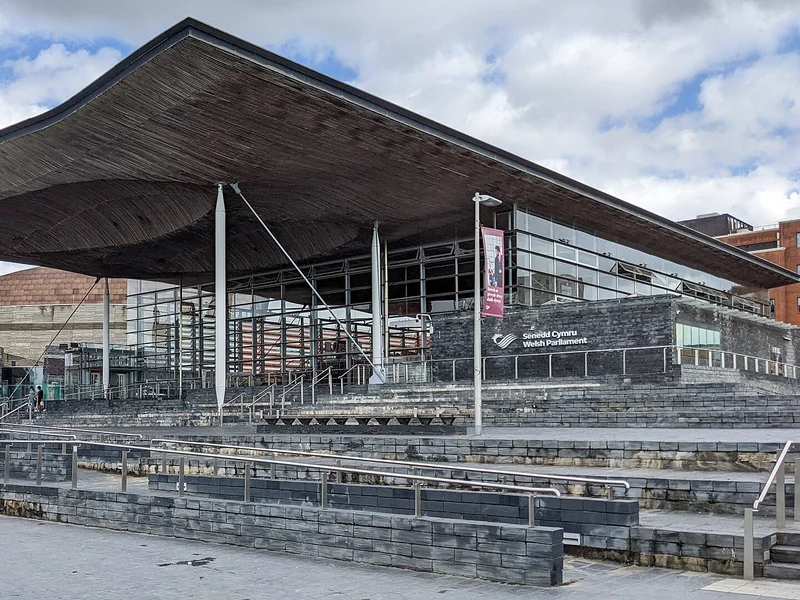
WAL · Wales
Senedd (Welsh Parliament)
- Sits in
- Senedd building, Cardiff Bay, in Cardiff, with the Welsh Government
- Members
- 96MSs (Members of the Senedd), six from each of 16 constituencies
- Since
- 1999, first as the Welsh Assembly
- Voting
- Closed-list proportional representation, every four years
- Powers
- Anything not reserved to the UK Parliament, including education and training, health and social services, economic development and housing. No UK Parliament agreement needed since 2011.
- Language
- Members speak Welsh or English; it publishes in both
- Visit
- Guided tours or public gallery seats via the Senedd (formerly Assembly) Booking Service

SCO · Scotland
Scottish Parliament
- Sits in
- Holyrood, in Edinburgh
- Members
- 129MSPs (Members of the Scottish Parliament)
- Since
- 1999
- Voting
- A form of proportional representation
- Powers
- Anything not specifically reserved to the UK Parliament, including civil and criminal law, health, education, planning and additional tax-raising powers
- Visit
- Information, tickets and tours via visitor services
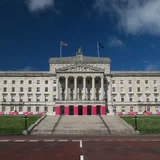
NI · Northern Ireland
Northern Ireland Assembly
- Sits in
- Stormont, in Belfast
- Members
- 90MLAs (Members of the Legislative Assembly)
- Since
- 1998, soon after the Belfast (Good Friday) Agreement. An earlier Northern Ireland Parliament ran from 1922, when Ireland was divided, to 1972, soon after the Troubles began in 1969.
- Voting
- A form of proportional representation; power-sharing divides ministerial offices among the main parties
- Powers
- Education, agriculture, the environment, health and social services
- Suspended
- Several times, when local political leaders found it hard to work together
- Visit
- Contact the Education Service or an MLA
Image credits: The wub, CC BY-SA 4.0, via Wikimedia Commons; Kay Williams (2017), CC BY-SA 2.0, via Wikimedia Commons; Johndmcdonald, CC BY-SA 3.0, via Wikimedia Commons.
Read the full explanation (5 min)Optional: the facts above, told in order as one read.
MPs are elected at a General Election, which is held at least every five years. If an MP dies or resigns, there will be a fresh election called a by-election in his or her constituency.
MPs are elected through a system called ‘first past the post’. In each constituency, the candidate who gets the most votes is elected. The government is usually formed by the party that wins the majority of constituencies. If no party wins a majority, two parties may join together to form a coalition, as the Conservatives and the Liberal Democrats did after the 2010 General Election.
Adult citizens of the UK, and citizens of the Commonwealth and the Irish Republic who are resident in the UK, can vote in all public elections; EU citizens living in the UK cannot vote in General Elections. The present voting age of 18 was set in 1969. To vote, your name must be on the electoral register: you register through your local council’s electoral registration office, and the register is updated every year in September or October. In Northern Ireland, a system called ‘individual registration’ means everyone entitled to vote completes their own registration form. Before an election you are sent a poll card, which tells you where your polling station (or polling place in Scotland) is and when the election will take place. Polling stations are open from 7am to 10pm. Staff ask for your name and address (in Northern Ireland you also show photographic identification), and you fill in your ballot paper privately in a polling booth; no one has the right to make you vote for a particular candidate. If it is difficult to get to a polling station, you can register for a postal ballot.
Most citizens of the UK, the Irish Republic or the Commonwealth aged 18 or over can stand for public office. Exceptions include members of the armed forces, civil servants and people found guilty of certain criminal offences. Members of the House of Lords may not stand for election to the House of Commons but are eligible for all other public offices.
All elected members have a duty to serve and represent their constituents. You can get contact details for all your representatives and their parties from your local library and from www.parliament.uk; MPs, Members of the Senedd (MSs) and Members of the Scottish Parliament (MSPs) are also listed in The Phone Book. You can contact MPs by letter or telephone at their constituency office or at their office in the House of Commons. Many MPs, MSs and MSPs also hold regular local ‘surgeries’, often advertised in the local newspaper, where constituents can go in person to talk about issues of concern.
The public can listen to debates in the Palace of Westminster from the public galleries of both the House of Commons and the House of Lords. You can write to your local MP in advance to ask for tickets, or queue on the day at the public entrance. Entrance is free. Queues for the House of Commons can be long, and it is usually easier to get into the House of Lords.
Since 1997, some powers have been devolved from the central government to give people in Wales, Scotland and Northern Ireland more control over matters that directly affect them. There has been a Welsh Assembly (now called the Senedd) and a Scottish Parliament since 1999. There is also a Northern Ireland Assembly, although this has been suspended on a few occasions.
Policy and laws governing defence, foreign affairs, immigration, social security and most taxation all remain under central UK government control. However, many other public services, such as education, are controlled by the devolved administrations. The devolved administrations each have their own civil service.
The Welsh Government and the Senedd are based in Cardiff, the capital city of Wales; the Senedd building is in Cardiff Bay. Since the May 2026 election, the Senedd has 96 Members (MSs), with six elected from each of 16 constituencies. Elections are held every four years using closed-list proportional representation. Members can speak in either Welsh or English, and the Senedd publishes in both languages. Under the reserved-powers model introduced by the Wales Act 2017, the Senedd can make laws on matters that are not reserved to the UK Parliament, including education and training, health and social services, economic development and housing. Since 2011 it has been able to pass laws on these topics without the agreement of the UK Parliament. Visitors can book guided tours or seats in the public galleries through the Senedd (formerly Assembly) Booking Service.
The Scottish Parliament was formed in 1999. It sits at Holyrood in Edinburgh, the capital city of Scotland. There are 129 Members of the Scottish Parliament (MSPs), elected by a form of proportional representation. The Scottish Parliament can pass laws for Scotland on all matters which are not specifically reserved to the UK Parliament, including civil and criminal law, health, education, planning, and additional tax-raising powers. Visitors can get information, book tickets or arrange tours through its visitor services.
A Northern Ireland Parliament was established in 1922, when Ireland was divided, but it was abolished in 1972, shortly after the Troubles broke out in 1969. The Northern Ireland Assembly was established soon after the Belfast Agreement (also known as the Good Friday Agreement) in 1998. There is a power-sharing agreement which distributes ministerial offices amongst the main parties. The Assembly has 90 elected members, known as MLAs (Members of the Legislative Assembly). They are elected with a form of proportional representation.
The Northern Ireland Assembly can make decisions on issues such as education, agriculture, the environment, health, and social services. The UK government has the power to suspend all devolved assemblies. It has used this power several times in Northern Ireland when local political leaders found it difficult to work together. The Northern Ireland Assembly building is known as Stormont, in Belfast. To visit, you can contact the Education Service or an MLA.
Official source
Do not mix up
Practise
Check this topic
Preparing three random questions from this topic.