
In this topic
What to be able to answer
- Know what MPs and constituencies are, and what MPs do.
- Separate the House of Commons from the House of Lords, and know which can overrule the other.
- Know who nominates and who appoints life peers, and what changed in 1958 and 1999.
- Know how the Speaker is chosen and what the Speaker does.
Learn
The House of Commons, the House of Lords and the Speaker
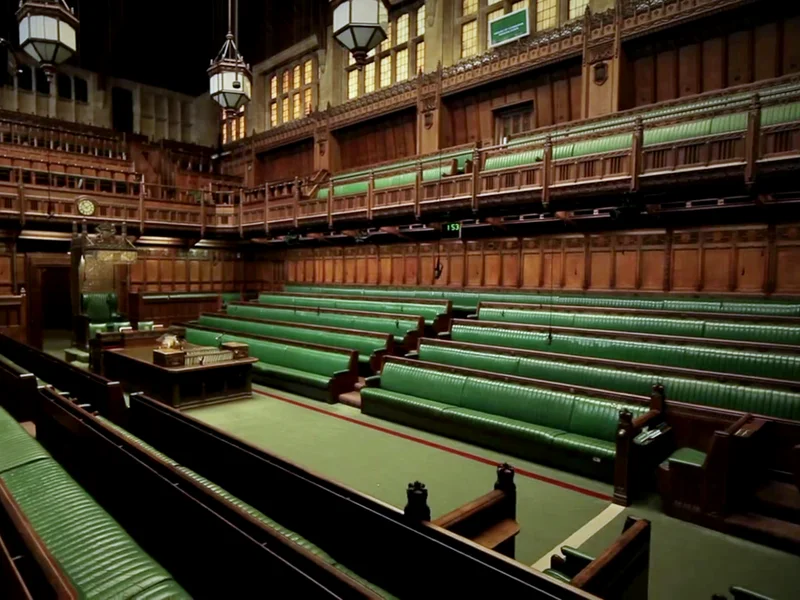
The system of government in the UK is a parliamentary democracy. The UK is divided into parliamentary constituencies. Voters in each constituency elect their Member of Parliament (MP) in a General Election. All of the elected MPs form the House of Commons. Most MPs belong to a political party, and the party with the majority of MPs forms the government. If one party does not get a majority, two parties can join together to form a coalition.
Who does what in Parliament
Two chambers and a neutral chair. Only the members of the House of Commons are elected.
Elected
House of Commons
- MPs are elected at a General Election, one for each parliamentary constituency (a small area of the country).
- More important chamber, because its members are democratically elected. The Prime Minister and almost all the cabinet are MPs.
- MPs' jobs: represent everyone in their constituency, help to create new laws, scrutinise and comment on what the government is doing, and debate important national issues.
- Independents are the few MPs who belong to none of the main parties.
- Can overrule the Lords, although these powers are not used often.
Not elected
House of Lords
- Peers are not elected by the people and do not represent a constituency.
- More independent of the government than the House of Commons.
- Its work: suggests amendments or proposes new laws for MPs to discuss, checks that laws passed by the Commons are fit for purpose, and holds the government to account.
- Specialist peers bring knowledge that helps in making and checking laws.
- Peers may not stand for election to the House of Commons.
Neutral chair
The Speaker
- Chairs debates in the House of Commons and is its chief officer.
- Chosen by other MPs in a secret ballot.
- Neutral: represents no political party, but is still an MP who represents a constituency and deals with constituents' problems.
- Keeps order so the rules are followed, guarantees the opposition time to debate issues it chooses, and represents Parliament on ceremonial occasions.
How the House of Lords has changed
Its role and membership have changed over the last 50 years.
- Until 1958All peers were hereditary (they inherited their title), senior judges or bishops of the Church of England.
- 1958Life peers began: peers for their own lifetime only, so the title is not passed on. The Prime Minister nominates; the monarch appoints on the Prime Minister's advice. Other main party leaders also nominate, and an independent Appointments Commission picks non-party peers. Most have had an important career in politics, business, law or another profession.
- 1999Hereditary peers lost the automatic right to attend the House of Lords. They elected a few of their number to represent them.
Since the handbook: the House of Lords (Hereditary Peers) Act 2026 removed the remaining hereditary peers from 29 April 2026. For the test, remember 1999.
Read the full explanation (3 min)Optional: the facts above, told in order as one read.
The system of government in the UK is a parliamentary democracy. The UK is divided into parliamentary constituencies. Voters in each constituency elect their Member of Parliament (MP) in a General Election. All of the elected MPs form the House of Commons. Most MPs belong to a political party, and the party with the majority of MPs forms the government. If one party does not get a majority, two parties can join together to form a coalition.
The House of Commons is regarded as the more important of the two chambers in Parliament because its members are democratically elected. The Prime Minister and almost all members of the cabinet are members of the House of Commons. Each MP represents a parliamentary constituency, which is a small area of the country. MPs represent everyone in their constituency, help to create new laws, scrutinise and comment on what the government is doing, and debate important national issues.
Members of the House of Lords, known as peers, are not elected by the people and do not represent a constituency. The role and membership of the House of Lords has changed over the last 50 years.
Until 1958, all peers were hereditary (meaning they inherited their title), senior judges, or bishops of the Church of England. Since 1958, the Prime Minister has had the power to nominate peers just for their own lifetime. These are called life peers. They have usually had an important career in politics, business, law or another profession. Life peers are appointed by the monarch on the advice of the Prime Minister. They also include people nominated by the leaders of the other main political parties or by an independent Appointments Commission for non-party peers.
Since 1999, hereditary peers have lost the automatic right to attend the House of Lords. They elected a few of their number to represent them. Since the handbook, the House of Lords (Hereditary Peers) Act 2026 removed the remaining hereditary peers from 29 April 2026.
The House of Lords is normally more independent of the government than the House of Commons. It can suggest amendments or propose new laws, which are then discussed by MPs. The House of Lords checks laws that have been passed by the House of Commons to ensure they are fit for purpose. It also holds the government to account, and peers who are specialists in particular areas bring knowledge that is useful in making and checking laws. Members of the House of Lords may not stand for election to the House of Commons. The House of Commons has powers to overrule the House of Lords, but these are not used often.
Debates in the House of Commons are chaired by the Speaker. The Speaker is the chief officer of the House of Commons. The Speaker is neutral and does not represent a political party, even though he or she is an MP, represents a constituency and deals with constituents’ problems like any other MP. The Speaker is chosen by other MPs in a secret ballot.
The Speaker keeps order during political debates to make sure the rules are followed. This includes making sure the opposition has a guaranteed amount of time to debate issues which it chooses. The Speaker also represents Parliament on ceremonial occasions.
A few MPs do not represent any of the main political parties; they are called independents. To visit Parliament, you can write to your local MP in advance to ask for tickets or queue on the day at the public entrance. Entrance is free.
Do not mix up
Practise
Check this topic
Preparing three random questions from this topic.