
In this topic
What to be able to answer
- Say what income tax and National Insurance are paid on and what each pays for.
- Separate PAYE for employees from self-assessment for the self-employed, and know HMRC collects taxes.
- Know when the NI number arrives and what a newcomer needs to get one.
- Recall the driving ages, licence renewal, R plate, foreign licence, DVLA, insurance, vehicle tax and MOT rules.
Learn
Income tax, National Insurance and driving rules
Income tax and National Insurance
Both come out of earnings, but each pays for different things.
Income tax
Paid on
- Wages from paid employment
- Profits from self-employment
- Taxable benefits
- Pensions
- Income from property, savings and dividends
Pays for
- Roads
- Education
- Police
- The armed forces
National Insurance
Paid by
Almost everybody in paid work, including self-employed people.
Pays for
- The state retirement pension
- The NHS
Pay too little and you will not get contributory benefits such as Jobseeker’s Allowance or a full state retirement pension.
Employees
Your employer takes the right amount of income tax and National Insurance from your pay and sends the tax to HM Revenue & Customs (HMRC), the government department that collects taxes. This system is called Pay As You Earn (PAYE).
PayslipPAYE- Pay
- −Income taxto HMRC
- −National Insuranceto HMRC
- =Take-home pay
Self-employed people
You pay your own tax and National Insurance. Tax is paid through self-assessment, which includes completing a tax return.
If HMRC sends you a tax return, complete and return it as soon as you have all the necessary information.
A National Insurance number is a unique personal account number. It makes sure that the National Insurance Contributions and tax you pay are properly recorded against your name. All young people in the UK are sent a National Insurance number just before their 16th birthday.
A non-UK national living in the UK and looking for work, starting work or setting up as self-employed will need a National Insurance number, although you can start work without one. You apply to the Department for Work and Pensions (DWP), which may ask you to attend an interview at Jobcentre Plus. You will usually need documents that prove your identity and that you have permission to work in the UK. A National Insurance number does not on its own prove to an employer that you have the right to work in the UK.
Driving numbers
Each number belongs to one rule. Learn them as pairs.
- 16
Moped
The minimum age to ride a moped.
- 17
Car or motorcycle
You need a driving licence to drive on public roads. To get one, pass a driving test of both your knowledge and your practical skills. Large vehicles have other age limits and special tests.
- 70
Licence renewal
A licence lasts until you are 70. After that, it is valid for three years at a time.
Licence from outside the EU
Usable in the UK for up to 12 months; after that, get a UK full driving licence. A licence from the EU, Iceland, Liechtenstein or Norway can be used for as long as it is valid.
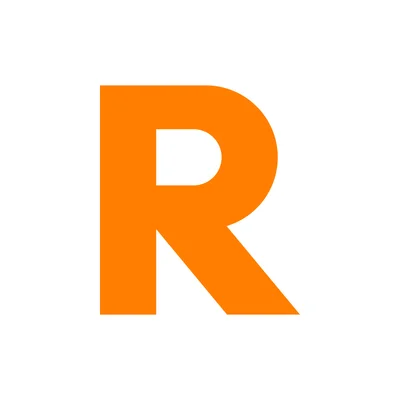
Northern Ireland R plate
A newly qualified driver must display an ‘R’ plate (for restricted driver) for one year after passing the test.
Since the handbook: drivers who start learning from 1 October 2026 display R plates for two years.
If you live in the UK, your car or motorcycle needs:
- Register it with the Driver and Vehicle Licensing Agency (DVLA).
- Pay vehicle tax every year (often called road tax).
- Have valid motor insurance. Driving without it is a serious criminal offence.
- Once it is over three years old, take a Ministry of Transport (MOT) test every year. It is an offence not to have an MOT certificate.
Read the full explanation (3 min)Optional: the facts above, told in order as one read.
People in the UK have to pay tax on their income, which includes wages from paid employment, profits from self-employment, taxable benefits, pensions, and income from property, savings and dividends. Money raised from income tax pays for government services such as roads, education, police and the armed forces.
For most people, the right amount of income tax is automatically taken from their wages by their employer and paid directly to HM Revenue & Customs (HMRC), the government department that collects taxes. This system is called ‘Pay As You Earn’ (PAYE). If you are self-employed, you need to pay your own tax through a system called ‘self-assessment’, which includes completing a tax return. If HMRC sends you a tax return, complete and return it as soon as you have all the necessary information.
Almost everybody in the UK who is in paid work, including self-employed people, must pay National Insurance Contributions. The money raised from National Insurance Contributions is used to pay for state benefits and services such as the state retirement pension and the National Health Service (NHS). Employees have their National Insurance Contributions deducted from their pay by their employer. People who are self-employed need to pay National Insurance Contributions themselves. Anyone who does not pay enough National Insurance Contributions will not be able to receive certain contributory benefits such as Jobseeker’s Allowance or a full state retirement pension.
A National Insurance number is a unique personal account number. It makes sure that the National Insurance Contributions and tax you pay are properly recorded against your name. All young people in the UK are sent a National Insurance number just before their 16th birthday.
A non-UK national living in the UK and looking for work, starting work or setting up as self-employed will need a National Insurance number, although you can start work without one. You apply to the Department for Work and Pensions (DWP), which may ask you to attend an interview at Jobcentre Plus. You will usually need documents that prove your identity and that you have permission to work in the UK. A National Insurance number does not on its own prove to an employer that you have the right to work in the UK.
In the UK, you must be at least 17 years old to drive a car or motorcycle and you must have a driving licence to drive on public roads. To get a UK driving licence you must pass a driving test, which tests both your knowledge and your practical skills. You need to be at least 16 years old to ride a moped, and there are other age requirements and special tests for driving large vehicles.
Drivers can use their driving licence until they are 70 years old. After that, the licence is valid for three years at a time.
In Northern Ireland, a newly qualified driver must display an ‘R’ plate (for restricted driver) for one year after passing the test.
If your driving licence is from a country in the European Union (EU), Iceland, Liechtenstein or Norway, you can drive in the UK for as long as your licence is valid. If you have a licence from any other country, you may use it in the UK for up to 12 months. To continue driving after that, you must get a UK full driving licence.
If you are resident in the UK, your car or motorcycle must be registered at the Driver and Vehicle Licensing Agency (DVLA). You must pay an annual vehicle tax (often called road tax). You must also have valid motor insurance — it is a serious criminal offence to drive without insurance. If your vehicle is over three years old, you must take it for a Ministry of Transport (MOT) test every year. It is an offence not to have an MOT certificate if your vehicle is more than three years old.
Do not mix up
Practise
Check this topic
Preparing three random questions from this topic.