
In this topic
What to be able to answer
- Know what the judiciary does and why it is independent.
- Match minor, serious, youth and civil cases to the right court in England, Wales and Northern Ireland, and in Scotland.
- Recall who sits on a jury, jury sizes and verdicts, Youth Court rules, the Old Bailey, small-claims limits and solicitors.
Learn
Criminal courts, civil courts and the jury system
Judges (who are together called ‘the judiciary’) are responsible for interpreting the law and ensuring that trials are conducted fairly. The government cannot interfere with this. If judges find that the government's actions are illegal, the government must either change its policies or ask Parliament to change the law. If judges find that a public body is not respecting someone's legal rights, they can order that body to change its practices and/or pay compensation.
Judges also make decisions in disputes between members of the public or organisations, such as about contracts, property or employment rights, or after an accident. In England, judges developed ‘common law’ by following previous decisions (precedence) and tradition; in Scotland, the legal system developed differently and laws were ‘codified’ (written down).
Which court hears it?
The court systems differ: Scotland often uses different courts for the same kind of case.
Minor criminal cases
- England, Wales and Northern Ireland
- Magistrates' Court
- Scotland
- Justice of the Peace Court
Magistrates and Justices of the Peace (JPs) are members of the local community. In England, Wales and Scotland they usually work unpaid, need no legal qualifications, are trained and have a legal adviser. Magistrates decide the verdict and, if the person is guilty, the sentence. In Northern Ireland, a District Judge or Deputy District Judge, who is legally qualified and paid, hears these cases.
Serious criminal cases
- England, Wales and Northern Ireland
- Crown Court: judge and jury
- Scotland
- Sheriff Court: a sheriff, or a sheriff with a jury
Most serious, such as murder
- England, Wales and Northern Ireland
- Crown Court
- Scotland
- High Court: judge and jury
Young people aged 10 to 17
- England, Wales and Northern Ireland
- Youth Court
- Scotland
- Children's Hearings System
A Youth Court has up to three specially trained magistrates or a District Judge. Parents or carers are expected to attend. The public is not allowed in, and the young person's name or photograph cannot be published. The most serious cases go to the Crown Court. Northern Ireland also uses youth conferencing.
Civil disputes
- England, Wales and Northern Ireland
- County Court
- Scotland
- Sheriff Court
Getting back money owed, personal injury, family matters, breaches of contract and divorce.
Serious civil cases
- England, Wales and Northern Ireland
- High Court
- Scotland
- Court of Session, Edinburgh
For example, when a large amount of compensation is claimed.
The jury
England, Wales, NI
Scotland
- Members of the public chosen at random from the local electoral register, aged 18 to 70 (18 to 75 in England and Wales).
- Everyone summoned must serve unless they are not eligible (for example, they have a criminal conviction) or give a good reason to be excused, such as ill health.
- The jury listens to the evidence and decides 'guilty' or 'not guilty'. If the defendant is guilty, the judge decides the penalty.
- In Scotland, a third verdict of 'not proven' is also possible.
The small claims procedure is an informal way of helping people to settle minor disputes without spending a lot of time and money using a lawyer. This procedure is used for claims of less than £10,000 in England and Wales and £5,000 in Scotland and Northern Ireland. The hearing is held in front of a judge in an ordinary room, and people from both sides sit around a table. Small claims can also be issued online through Money Claims Online, and you can get details about the procedure from your local County Court or Sheriff Court.
Solicitors are trained lawyers who give advice on legal matters, take action for their clients and represent their clients in court. Many advertise in local newspapers, and Citizens Advice can give you names of local solicitors and which areas of law they specialise in. Solicitors' charges are usually based on how much time they spend on a case, so find out at the start how much it is likely to cost.
Read the full explanation (4 min)Optional: the facts above, told in order as one read.
Judges (who are together called ‘the judiciary’) are responsible for interpreting the law and ensuring that trials are conducted fairly. The government cannot interfere with this. If judges find that the government’s actions are illegal, the government must either change its policies or ask Parliament to change the law. If judges find that a public body is not respecting someone’s legal rights, they can order that body to change its practices and/or pay compensation.
Judges also make decisions in disputes between members of the public or organisations, such as about contracts, property or employment rights, or after an accident. In England, judges developed ‘common law’ by following previous decisions (precedence) and tradition; in Scotland, the legal system developed differently and laws were ‘codified’ (written down).
In England, Wales and Northern Ireland, most minor criminal cases are dealt with in a Magistrates’ Court. In Scotland, minor criminal offences go to a Justice of the Peace Court. Magistrates and Justices of the Peace (JPs) are members of the local community. In England, Wales and Scotland they usually work unpaid and do not need legal qualifications. They receive training to do the job and are supported by a legal adviser. Magistrates decide the verdict in each case and, if the person is found guilty, the sentence. In Northern Ireland, cases are heard by a District Judge or Deputy District Judge, who is legally qualified and paid.
In England, Wales and Northern Ireland, serious offences are tried in front of a judge and a jury in a Crown Court. In Scotland, serious cases are heard in a Sheriff Court with either a sheriff or a sheriff with a jury. The most serious cases in Scotland, such as murder, are heard at a High Court with a judge and jury.
A jury is made up of members of the public chosen at random from the local electoral register. Anyone on the register aged 18 to 70 (18 to 75 in England and Wales) can be asked to serve. In England, Wales and Northern Ireland a jury has 12 members, and in Scotland a jury has 15 members. Everyone who is summoned to do jury service must do it unless they are not eligible (for example, because they have a criminal conviction) or they provide a good reason to be excused, such as ill health.
The jury has to listen to the evidence presented at the trial and then decide a verdict of ‘guilty’ or ‘not guilty’ based on what they have heard. In Scotland, a third verdict of ‘not proven’ is also possible (it was abolished for trials starting on or after 1 January 2026). If the jury finds a defendant guilty, the judge decides the penalty.
In England, Wales and Northern Ireland, if an accused person is aged 10 to 17, the case is normally heard in a Youth Court in front of up to three specially trained magistrates or a District Judge. The most serious cases will go to the Crown Court. The parents or carers of the young person are expected to attend the hearing. Members of the public are not allowed in Youth Courts, and the name or photographs of the accused young person cannot be published.
Scotland uses the Children’s Hearings System to deal with children and young people who have committed an offence. Northern Ireland uses youth conferencing to consider how a child should be dealt with.
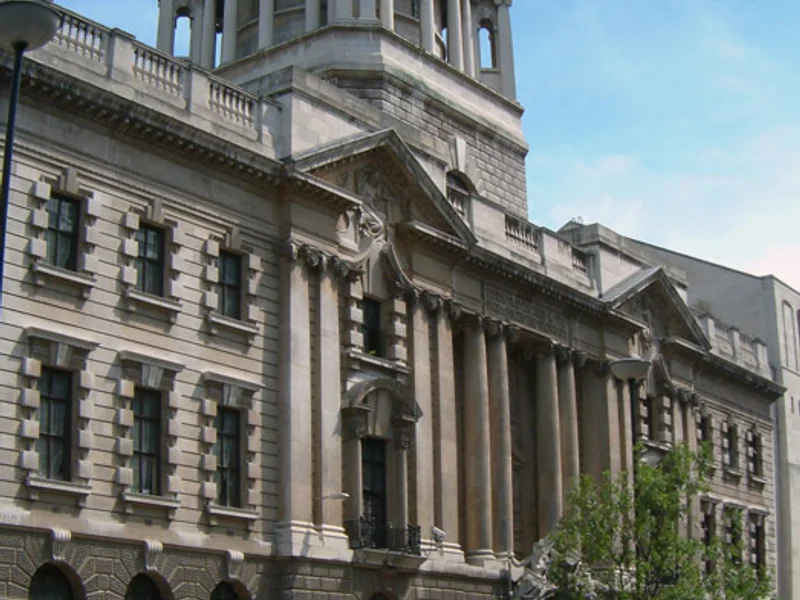
The Old Bailey is probably the most famous criminal court in the world.
County Courts deal with a wide range of civil disputes, including money owed, personal injury, family matters, breaches of contract, and divorce. In Scotland, most of these matters are dealt with in the Sheriff Court. More serious civil cases, for example when a large amount of compensation is being claimed, are dealt with in the High Court (England, Wales and Northern Ireland) or the Court of Session in Edinburgh (Scotland).
The small claims procedure is an informal way of helping people to settle minor disputes without spending a lot of time and money using a lawyer. This procedure is used for claims of less than £10,000 in England and Wales and £5,000 in Scotland and Northern Ireland. The hearing is held in front of a judge in an ordinary room, and people from both sides sit around a table. Small claims can also be issued online through Money Claims Online, and you can get details about the procedure from your local County Court or Sheriff Court.
Solicitors are trained lawyers who give advice on legal matters, take action for their clients and represent their clients in court. Many advertise in local newspapers, and Citizens Advice can give you names of local solicitors and which areas of law they specialise in. Solicitors’ charges are usually based on how much time they spend on a case, so find out at the start how much it is likely to cost.
Official source
Do not mix up
Practise
Check this topic
Preparing three random questions from this topic.