
In this topic
What to be able to answer
- Know the Prime Minister's role, homes and how a PM can be replaced.
- Match each cabinet job to its responsibility, and each government role to its opposition mirror.
- Understand parties, pressure groups, civil service neutrality, local councils and the rules for Hansard, the press and broadcasters.
Learn
The PM, cabinet, opposition, parties, civil service and local councils
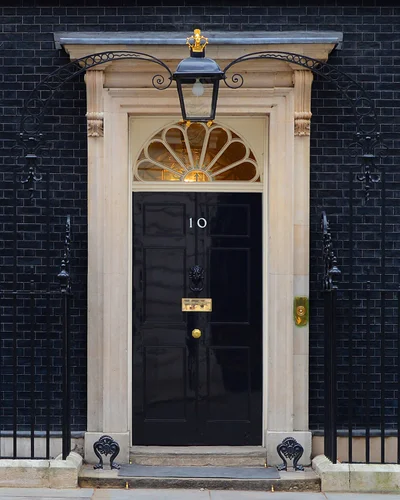
The Prime Minister (PM) is the leader of the political party in power. He or she appoints the members of the cabinet and has control over many important public appointments. The official home of the Prime Minister is 10 Downing Street, in central London, near the Houses of Parliament. The PM also has a country house outside London called Chequers.
The Prime Minister can be changed if the MPs in the governing party decide to do so, or if he or she wishes to resign. The Prime Minister usually resigns if his or her party loses a General Election.
Government and opposition
The second-largest party in the House of Commons is the opposition. Each government role has an opposition mirror.
Prime Minister
Leads the party in power and appoints the cabinet.
Leader of the Opposition
Leads the second-largest party; usually becomes PM if it wins the next General Election.
Cabinet
About 20 senior MPs the PM appoints to run departments. Meets weekly.
Shadow cabinet
Senior opposition MPs, called shadow ministers, appointed by the Leader of the Opposition.
What the cabinet does
Makes important decisions about government policy; many must be debated or approved by Parliament. Each department also has Ministers of State and Parliamentary Under-Secretaries of State.
What the opposition does
Points out the government's failures and weaknesses, challenges it and puts forward alternative policies, notably at Prime Minister's Questions (PMQs), held every week while Parliament is sitting.
Cabinet jobs
Chancellor of the Exchequer
The economy
Home Secretary
Crime, policing and immigration
Foreign Secretary
Managing relationships with foreign countries
Secretaries of State
Subjects such as education, health and defence
Anyone aged 18 or over can stand for election as an MP but they are unlikely to win unless they have been nominated to represent one of the major political parties. These are the Conservative Party, the Labour Party, the Liberal Democrats, or one of the parties representing Scottish, Welsh or Northern Irish interests. A few MPs, called ‘independents’, do not represent any of the main political parties; they usually represent an issue important to their constituency. The main parties actively look for members of the public to join their debates, contribute to their costs and help at elections. They have branches in most constituencies and hold policy-making conferences every year.
Pressure and lobby groups are organisations which try to influence government policy. They play an important role in politics. Some are representative organisations such as the CBI (Confederation of British Industry), which represents the views of British business. Others campaign on particular topics, such as the environment (for example, Greenpeace) or human rights (for example, Liberty).
Civil servants support the government in developing and implementing its policies. They also deliver public services. Civil servants are accountable to ministers. They are chosen on merit and are politically neutral — they are not political appointees, and they are among the groups who cannot stand for public office. People can apply to join the civil service through an application process, like other jobs in the UK. Civil servants are expected to carry out their role with dedication and a commitment to the civil service and its core values. These are: integrity, honesty, objectivity and impartiality (including being politically neutral).
Towns, cities and rural areas in the UK are governed by democratically elected councils, often called ‘local authorities’. Some areas have both district and county councils, which have different functions; most large towns and cities have a single local authority. Local authorities provide a range of services and are funded by money from central government and by local taxes. Many local authorities appoint a mayor, who is the ceremonial leader of the council; in some towns, a mayor is elected to be the effective leader of the administration. London has 33 local authorities, with the Greater London Authority and the Mayor of London coordinating policies across the capital. For most local authorities, local elections for councillors are held in May every year, and many candidates stand as members of a political party.
Parliamentary proceedings are broadcast on television and published in official reports called Hansard. Written reports can be found in large libraries and at www.parliament.uk. The UK has a free press, which means that what is written in newspapers is free from government control; some newspaper owners and editors hold strong political opinions and run campaigns to try to influence government policy and public opinion. By law, radio and television coverage of political parties must be balanced, with equal time given to rival viewpoints.
Read the full explanation (4 min)Optional: the facts above, told in order as one read.
The Prime Minister (PM) is the leader of the political party in power. He or she appoints the members of the cabinet and has control over many important public appointments. The official home of the Prime Minister is 10 Downing Street, in central London, near the Houses of Parliament. The PM also has a country house outside London called Chequers.
The Prime Minister can be changed if the MPs in the governing party decide to do so, or if he or she wishes to resign. The Prime Minister usually resigns if his or her party loses a General Election.
The Prime Minister appoints about 20 senior MPs to become ministers in charge of departments. These include the Chancellor of the Exchequer (responsible for the economy), the Home Secretary (responsible for crime, policing and immigration), and the Foreign Secretary (responsible for managing relationships with foreign countries). Other ministers, called Secretaries of State, are responsible for subjects such as education, health and defence.
These ministers form the cabinet, a committee which usually meets weekly and makes important decisions about government policy. Many of the decisions have to be debated or approved by Parliament. Each department also has Ministers of State and Parliamentary Under-Secretaries of State.
The second-largest party in the House of Commons is called the opposition. The leader of the opposition usually becomes Prime Minister if his or her party wins the next General Election. The leader of the opposition leads his or her party in pointing out the government’s failures and weaknesses. One important opportunity to do this is at Prime Minister’s Questions (PMQs), which takes place every week while Parliament is sitting.
The leader of the opposition also appoints senior opposition MPs to be ‘shadow ministers’. They form the shadow cabinet and their role is to challenge the government and put forward alternative policies.
Anyone aged 18 or over can stand for election as an MP but they are unlikely to win unless they have been nominated to represent one of the major political parties. These are the Conservative Party, the Labour Party, the Liberal Democrats, or one of the parties representing Scottish, Welsh or Northern Irish interests. A few MPs, called ‘independents’, do not represent any of the main political parties; they usually represent an issue important to their constituency. The main parties actively look for members of the public to join their debates, contribute to their costs and help at elections. They have branches in most constituencies and hold policy-making conferences every year.
Pressure and lobby groups are organisations which try to influence government policy. They play an important role in politics. Some are representative organisations such as the CBI (Confederation of British Industry), which represents the views of British business. Others campaign on particular topics, such as the environment (for example, Greenpeace) or human rights (for example, Liberty).
Civil servants support the government in developing and implementing its policies. They also deliver public services. Civil servants are accountable to ministers. They are chosen on merit and are politically neutral — they are not political appointees, and they are among the groups who cannot stand for public office. People can apply to join the civil service through an application process, like other jobs in the UK. Civil servants are expected to carry out their role with dedication and a commitment to the civil service and its core values. These are: integrity, honesty, objectivity and impartiality (including being politically neutral).
Towns, cities and rural areas in the UK are governed by democratically elected councils, often called ‘local authorities’. Some areas have both district and county councils, which have different functions; most large towns and cities have a single local authority. Local authorities provide a range of services and are funded by money from central government and by local taxes. Many local authorities appoint a mayor, who is the ceremonial leader of the council; in some towns, a mayor is elected to be the effective leader of the administration. London has 33 local authorities, with the Greater London Authority and the Mayor of London coordinating policies across the capital. For most local authorities, local elections for councillors are held in May every year, and many candidates stand as members of a political party.
Parliamentary proceedings are broadcast on television and published in official reports called Hansard. Written reports can be found in large libraries and at www.parliament.uk. The UK has a free press, which means that what is written in newspapers is free from government control; some newspaper owners and editors hold strong political opinions and run campaigns to try to influence government policy and public opinion. By law, radio and television coverage of political parties must be balanced, with equal time given to rival viewpoints.
Do not mix up
Practise
Check this topic
Preparing three random questions from this topic.