
In this topic
What to be able to answer
- Know the shift to Parliament: Whigs and Tories, the 1695 free press and Walpole as first Prime Minister.
- Place the 1656 Jewish settlers, the Huguenots, the 1707 union, George I, Culloden and the Highland Clearances.
- Match Smith, Hume, Watt, Burns, Arkwright, Cook and Sake Dean Mahomet to their work.
- Explain what drove the Industrial Revolution and how work changed.
Learn
Union, Enlightenment and the Industrial Revolution
Britain becomes a global power
Parliament, new arrivals, union with Scotland, the Jacobites, the Enlightenment and empire.
Parliament and the press
- After the Glorious Revolution, power shifted permanently from the monarch to Parliament.
- Two main groups, the Whigs and the Tories, began party politics. The Conservative Party is still called the Tories.
- From 1695, newspapers no longer needed a government licence: the start of a free press.
New arrivals
- 1656: the first Jews to come to Britain since the Middle Ages settled in London.
- 1680–1720: Huguenots, Protestant refugees from France escaping religious persecution, arrived. Many were educated and skilled, working as scientists, in banking or in weaving.
Union and the first Prime Minister
- 1707: the Act of Union (the Treaty of Union in Scotland) created the Kingdom of Great Britain.
- Scotland was no longer independent but kept its own legal and education systems and Presbyterian Church.
- 1714: Queen Anne died and Parliament chose a German, George I, her nearest Protestant relative.
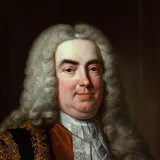 George I spoke little English, so he relied on his ministers. Sir Robert Walpole was the first Prime Minister, from 1721 to 1742.
Jacobites and the Highlands
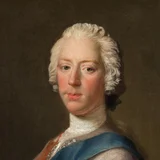 1745: Bonnie Prince Charlie (Charles Edward Stuart), grandson of James II, landed in Scotland and raised an army of Highland clansmen.
- 1746: George II's army defeated him at Culloden. He escaped to Europe, and the clans lost much of their power.
- Highland Clearances: landlords destroyed small farms (crofts) to make space for large flocks of sheep and cattle. Many Scots left for North America.
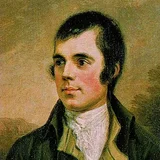 Robert Burns (1759–96), 'The Bard', was a Scottish poet. His song Auld Lang Syne is sung at New Year, called Hogmanay in Scotland.
The Enlightenment
- New ideas about politics, philosophy and science in the 18th century. Many of its great thinkers were Scottish.
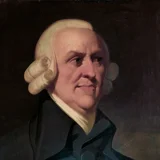 Adam Smith: ideas about economics still used today.
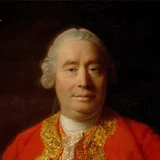 David Hume: ideas about human nature that still influence philosophers.
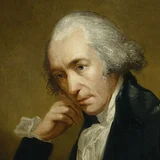 James Watt: work on steam power that helped the Industrial Revolution.
- A key principle: everyone should have the right to their own political and religious beliefs.
Empire and trade
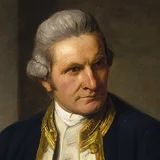 Captain James Cook mapped the coast of Australia, and a few colonies were set up there.
- The East India Company, first set up to trade, gained control of large parts of India.
- Trade and settlements overseas often brought Britain into conflict with France.
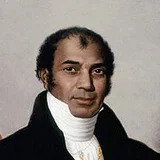 Sake Dean Mahomet, from Bengal, opened Britain's first curry house, the Hindoostane Coffee House in London, in 1810. He also introduced shampooing, the Indian art of head massage.
The Industrial Revolution
The rapid growth of industry in the 18th and 19th centuries. Britain was the first country to industrialise on a large scale.
Before the 18th century
- Agriculture was the biggest source of jobs.
- In cottage industries, people made goods such as cloth and lace at home.
What changed
- Machinery and steam power mechanised farming and manufacturing.
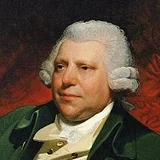 Richard Arkwright (1732–92) trained as a barber, then moved into textiles. He improved the carding machine (carding prepares fibres for spinning), built horse-driven spinning mills using one machine, and later used steam engines. He is remembered for running efficient, profitable factories.
- Canals linked factories to towns, cities and ports, especially in the Midlands and the north of England.
- The Bessemer process mass-produced steel, which grew shipbuilding and the railways.
After
- Manufacturing became the main source of jobs.
- Coal and other raw materials powered the new factories, and many people moved from the countryside to work in mines and factories.
Working conditions were very poor. No laws protected workers, who often worked long hours in dangerous places. Children worked too and were treated like adults, sometimes even more harshly.
Read the full story (4 min)Optional: the facts above, told in order as one read.
After the Glorious Revolution, the balance of power shifted permanently to Parliament. Two main groups emerged — the Whigs and the Tories — marking the beginning of party politics. The modern Conservative Party is still sometimes called the Tories.
From 1695, newspapers were allowed to operate without a government licence. This was an important time for the development of a free press — publications not controlled by the government.
The first Jews to come to Britain since the Middle Ages settled in London in 1656. Between 1680 and 1720, many refugees called Huguenots came from France. They were Protestants who had been persecuted for their religion. Many were educated and skilled, and worked as scientists, in banking, or in weaving and other crafts.
The Act of Union (known as the Treaty of Union in Scotland) was agreed in 1707, creating the Kingdom of Great Britain. Although Scotland was no longer an independent country, it kept its own legal and education systems and its Presbyterian Church.
When Queen Anne died in 1714, Parliament chose a German, George I, to be the next king because he was Anne’s nearest Protestant relative. George I did not speak very good English, which increased his reliance on ministers. The most important minister became known as the Prime Minister.
The first man to be called Prime Minister was Sir Robert Walpole, who held the office from 1721 to 1742.
In 1745, Charles Edward Stuart (Bonnie Prince Charlie), the grandson of James II, landed in Scotland. Supported by clansmen from the Scottish Highlands, he raised an army and initially had some successes. He was defeated by George II’s army at the Battle of Culloden in 1746 and escaped back to Europe.
After Culloden, the clans lost much of their power. A process known as the Highland Clearances began: Scottish landlords destroyed small farms (crofts) to make space for large flocks of sheep and cattle. Evictions became common in the early 19th century, and many Scots left for North America.
Robert Burns (1759–96), known in Scotland as ‘The Bard’, was a Scottish poet who wrote in the Scots language, English with Scottish words, and standard English. His best-known work is probably the song Auld Lang Syne, sung when celebrating the New Year — or Hogmanay, as it is called in Scotland.
During the 18th century, new ideas about politics, philosophy and science developed in a movement called the Enlightenment. Many of its great thinkers were Scottish. Adam Smith developed ideas about economics that are still referenced today. David Hume’s ideas about human nature continue to influence philosophers. James Watt’s work on steam power helped drive the Industrial Revolution. One of the most important principles of the Enlightenment was that everyone should have the right to their own political and religious beliefs, and that the state should not try to dictate to them.
Before the 18th century, agriculture was the biggest source of employment in Britain, and many people worked from home in cottage industries making goods such as cloth and lace. The Industrial Revolution was the rapid development of industry in Britain in the 18th and 19th centuries. Britain was the first country to industrialise on a large scale, driven by the development of machinery and the use of steam power. Many people moved from the countryside to work in mining and manufacturing. The Bessemer process for mass production of steel led to the growth of shipbuilding and railways, and manufacturing jobs became the main source of employment in Britain.
Richard Arkwright (1732–92) originally trained as a barber. When wigs became less popular, he started working in textiles. He improved the carding machine (carding is the process of preparing fibres for spinning into yarn and fabric) and developed horse-driven spinning mills that used only one machine. Later he used the steam engine to power machinery. He is remembered for the efficient and profitable way he ran his factories. Canals were built to link the factories to towns and cities and to the ports, particularly in the new industrial areas in the middle and north of England.
Working conditions during the Industrial Revolution were very poor. There were no laws to protect employees, who were often forced to work long hours in dangerous situations. Children also worked and were treated in the same way as adults, and sometimes even more harshly.
Captain James Cook mapped the coast of Australia and a few colonies were established there. The East India Company, originally set up to trade, gained control of large parts of India. Trading and settlements overseas sometimes brought Britain into conflict with other countries, particularly France.
Sake Dean Mahomet (1759–1851) was born in the Bengal region of India. He served in the Bengal army and came to Britain in 1782. In 1810, he opened the Hindoostane Coffee House in George Street, London — the first curry house in Britain. He and his wife also introduced ‘shampooing’, the Indian art of head massage, to Britain.
Do not mix up
Practise
Check this topic
Preparing three random questions from this topic.