
In this topic
What to be able to answer
- Know the order: the Romans leave in AD 410, Anglo-Saxon kingdoms form by about AD 600 and the Vikings arrive in AD 789.
- Match the missionaries: Patrick and Columba from Ireland in the north, Augustine from Rome in the south.
- Recognise Alfred the Great, the Danelaw, Cnut and Kenneth MacAlpin.
Learn
New settlers, Christian missionaries and Norse raiders
Anglo-Saxons, Vikings and the naming of Scotland
New settlers, new kingdoms, Christian missionaries and Viking raiders.
- AD 410AD 410
The Romans leave
Tribes from northern Europe invaded: the Jutes, the Angles and the Saxons. Their languages are the basis of modern English.
- By about AD 600By about AD 600
Anglo-Saxon kingdoms
- After many battles, kingdoms were established, mainly in what is now England.
- Much of Wales and Scotland stayed free of Anglo-Saxon rule.
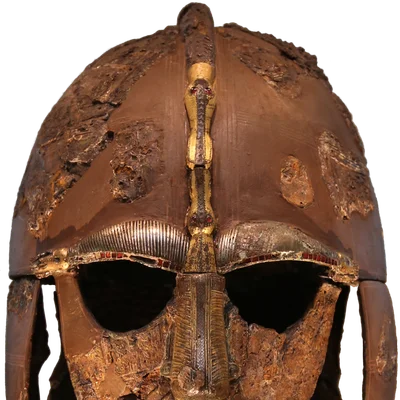
- At Sutton Hoo, in Suffolk, a king was buried in a ship with treasure and armour, under a mound of earth.
- MissionariesMissionaries
Christianity spreads
The Anglo-Saxons were not Christians when they first came to Britain.
- From Ireland, missionaries spread Christianity in the north: St Patrick, later patron saint of Ireland, and St Columba, who founded a monastery on the island of Iona.
- From Rome, St Augustine led missionaries in the south and became the first Archbishop of Canterbury.
- AD 789AD 789
The Vikings arrive
Vikings from Denmark and Norway raided coastal towns, taking goods and slaves. Then they stayed, forming communities in the east of England and in Scotland.
- Danelaw
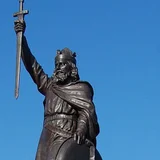 Danelaw
Alfred the Great
The Anglo-Saxon kingdoms in England united under King Alfred the Great, who defeated the Vikings.
- Many Vikings stayed in the Danelaw, in the east and north of England. Place names there, such as Grimsby and Scunthorpe, come from the Viking languages.
- Viking settlers mixed with local communities, and some became Christians.
- Danish kingsDanish kings
Cnut, also called Canute
Anglo-Saxon kings kept ruling England, except for a short period of Danish kings. Cnut was the first.
- ScotlandScotland
Kenneth MacAlpin
The threat of Viking attack united the people in the north under one king, Kenneth MacAlpin. The term Scotland began to be used.
Anglo-Saxon and Viking places
A royal ship burial, two centres of Christianity, and the land where the Vikings stayed.
- 1Sutton HooSuffolk. An Anglo-Saxon king was buried in a ship.
- 2CanterburySt Augustine became the first Archbishop of Canterbury.
- 3IonaAn island off the coast of Scotland. St Columba founded a monastery here.
- 4Grimsby and ScunthorpePlace names that come from the Viking languages
- Danelaw, in the east and north of England (border approximate)
Read the full story (2 min)Optional: the facts above, told in order as one read.
The Roman army left Britain in AD 410 to defend other parts of the Roman Empire and never returned. Britain was again invaded by tribes from northern Europe: the Jutes, the Angles and the Saxons. The languages they spoke are the basis of modern-day English.
Battles were fought against these invaders but, by about AD 600, Anglo-Saxon kingdoms were established in Britain. These kingdoms were mainly in what is now England. The burial place of one of the kings was at Sutton Hoo in modern Suffolk. This king was buried with treasure and armour, all placed in a ship which was then covered by a mound of earth.
Parts of the west of Britain, including much of what is now Wales, and Scotland, remained free of Anglo-Saxon rule.
The Anglo-Saxons were not Christians when they first came to Britain but, during this period, missionaries came to Britain to preach about Christianity. Missionaries from Ireland spread the religion in the north. The most famous of these were St Patrick, who would become the patron saint of Ireland, and St Columba, who founded a monastery on the island of Iona, off the coast of what is now Scotland. St Augustine led missionaries from Rome, who spread Christianity in the south. St Augustine became the first Archbishop of Canterbury.
The Vikings came from Denmark and Norway. They first visited Britain in AD 789 to raid coastal towns and take away goods and slaves. Then, they began to stay and form their own communities in the east of England and Scotland.
The Anglo-Saxon kingdoms in England united under King Alfred the Great, who defeated the Vikings. Many of the Viking invaders stayed in Britain — especially in the east and north of England in an area known as the Danelaw. Many place names there, such as Grimsby and Scunthorpe, come from the Viking languages. The Viking settlers mixed with local communities and some converted to Christianity.
Anglo-Saxon kings continued to rule what is now England, except for a short period when there were Danish kings. The first of these was Cnut, also called Canute.
In the north, the threat of attack by Vikings had encouraged the people to unite under one king, Kenneth MacAlpin. The term Scotland began to be used to describe that country.
Do not mix up
Practise
Check this topic
Preparing three random questions from this topic.