
In this topic
What to be able to answer
- Put the Stone Age, first farmers, Bronze Age and Iron Age in order, with the 10,000, 6,000 and 4,000-year dates.
- Place Stonehenge in Wiltshire, Skara Brae on Orkney in Scotland and Maiden Castle in Dorset.
- Know how Bronze and Iron Age people lived, what they made and what language they spoke.
Learn
From Stone Age hunters to Iron Age kingdoms

From hunters to the first coins
Prehistoric Britain in order, with the places still standing today.
- Stone AgeStone Age
Hunter-gatherers
The first people to live in Britain hunted herds of deer and horses. For much of the Stone Age, a land bridge joined Britain to the continent.
- 10,000 years ago10,000 years ago
Britain becomes an island
The Channel permanently separated Britain from the continent.
- 6,000 years ago6,000 years ago
The first farmers
They probably came from south-east Europe and built houses, tombs and monuments.
- Stonehenge, in Wiltshire, England, was probably a special gathering place for seasonal ceremonies.
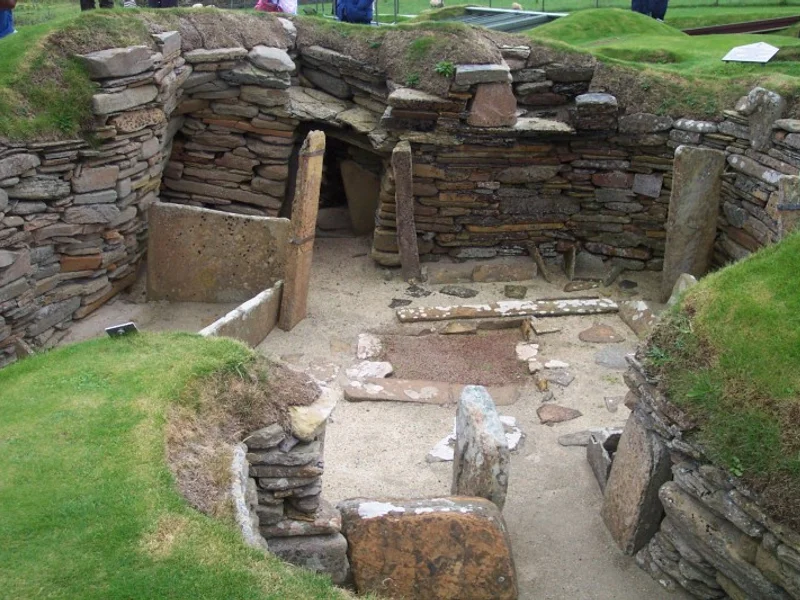
- Skara Brae, on Orkney off the north coast of Scotland, is the best-preserved prehistoric village in northern Europe. It shows how people lived near the end of the Stone Age.
- 4,000 years ago4,000 years ago
Bronze Age
People learned to make bronze.
- They lived in roundhouses and buried their dead in tombs called round barrows.
- They were accomplished metalworkers, making tools, ornaments and weapons in bronze and gold.
- Iron AgeIron Age
Hill forts, Celtic languages and coins
People made weapons and tools out of iron. Most were farmers, craft workers or warriors.
- Roundhouses were grouped into larger settlements, sometimes defended hill forts. Maiden Castle, in Dorset, is a very impressive one.
- They spoke languages of the Celtic family; related languages are still spoken in parts of Wales, Scotland and Ireland.
- They made the first coins minted in Britain, some inscribed with the names of Iron Age kings. This marks the beginning of British history.
Prehistoric places you can still see
Two Stone Age sites and an Iron Age hill fort.
- 1StonehengeWiltshire, England. A Stone Age monument.
- 2Skara BraeOrkney, off the north coast of Scotland. A Stone Age village.
- 3Maiden CastleDorset, England. An Iron Age hill fort.
Read the full story (2 min)Optional: the facts above, told in order as one read.
The first people to live in Britain were hunter-gatherers, in what we call the Stone Age. For much of the Stone Age, Britain was connected to the continent by a land bridge. People came and went, following the herds of deer and horses which they hunted. Britain only became permanently separated from the continent by the Channel about 10,000 years ago.
The first farmers arrived in Britain 6,000 years ago. The ancestors of these first farmers probably came from south-east Europe. These people built houses, tombs and monuments on the land. One of these monuments, Stonehenge, still stands in what is now the English county of Wiltshire. Stonehenge was probably a special gathering place for seasonal ceremonies.
Other Stone Age sites have also survived. Skara Brae on Orkney, off the north coast of Scotland, is the best preserved prehistoric village in northern Europe, and has helped archaeologists to understand more about how people lived near the end of the Stone Age.
Around 4,000 years ago, people learned to make bronze. We call this period the Bronze Age. People lived in roundhouses and buried their dead in tombs called round barrows. The people of the Bronze Age were accomplished metalworkers who made many beautiful objects in bronze and gold, including tools, ornaments and weapons.
The Bronze Age was followed by the Iron Age, when people learned how to make weapons and tools out of iron. People still lived in roundhouses grouped together into larger settlements, and sometimes defended sites called hill forts. A very impressive hill fort can still be seen today at Maiden Castle, in the English county of Dorset.
Most people in the Iron Age were farmers, craft workers or warriors. The language they spoke was part of the Celtic language family. Similar languages were spoken across Europe in the Iron Age and related languages are still spoken today in some parts of Wales, Scotland and Ireland.
The people of the Iron Age had a sophisticated culture and economy. They made the first coins to be minted in Britain, some inscribed with the names of Iron Age kings. This marks the beginnings of British history.
Do not mix up
Practise
Check this topic
Preparing three random questions from this topic.