
In this topic
What to be able to answer
- Know why Elizabeth I's reign is linked with the Church of England, the Armada, exploration and Shakespeare.
- Follow Mary, Queen of Scots from Scotland to prison, and how her son became James I of England.
- Recognise the King James Bible, and the Ulster plantations under Elizabeth I and James I.
Learn
The golden age, Shakespeare, exploration and the union of crowns
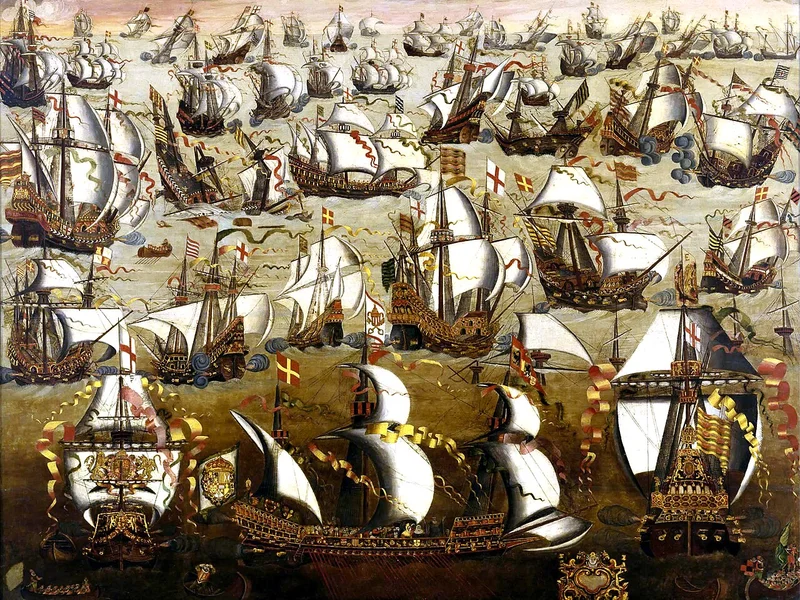
Elizabeth I, the younger daughter of Henry VIII, was a Protestant. She re-established the Church of England as the official Church. Everyone had to attend their local church and there were laws about religious services and prayers, but Elizabeth did not ask about people's real beliefs. She succeeded in finding a balance between the views of Catholics and the more extreme Protestants, avoiding serious religious conflict within England.
Elizabeth became one of the most popular monarchs in English history, particularly after 1588, when the English defeated the Spanish Armada — a large fleet of ships sent by Spain to conquer England and restore Catholicism.
The Elizabethan period was a time of growing patriotism: a feeling of pride in being English. English explorers sought new trade routes and tried to expand British trade into the Spanish colonies in the Americas. Sir Francis Drake, one of the commanders in the defeat of the Spanish Armada, was one of the founders of England's naval tradition. His ship, the Golden Hind, was one of the first to sail right around (‘circumnavigate’) the world. In Elizabeth I's time, English settlers first began to colonise the eastern coast of America.
William Shakespeare (1564–1616) was born in Stratford-upon-Avon. He was a playwright and actor who wrote many poems and plays; his most famous plays include A Midsummer Night's Dream, Hamlet, Macbeth and Romeo and Juliet. He dramatised past events but was one of the first to portray ordinary English men and women. He had a great influence on the English language and invented many words that are still common today. Many people regard him as the greatest playwright of all time.
Shakespeare lines still often quoted
‘Once more unto the breach’ (Henry V)
‘To be or not to be’ (Hamlet)
‘A rose by any other name’ (Romeo and Juliet)
'All the world's a stage' (As You Like It)
‘The darling buds of May’ (Sonnet 18)

Mary, Queen of Scots and James VI and I
How Elizabeth I's Catholic cousin led to a Protestant Scottish king on the English throne.
- 15601560
Scotland turns Protestant
The mainly Protestant Scottish Parliament abolished the Pope's authority, and Roman Catholic services became illegal. A Protestant Church of Scotland with an elected leadership was set up; unlike in England, it was not a state Church.
- Mary Stuart
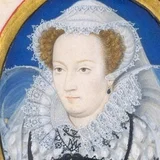 Mary Stuart
Mary, Queen of Scots
A Catholic, and Elizabeth I's cousin.
- She became queen when she was only a week old, after her father died, and spent much of her childhood in France.
- Back in Scotland she was at the centre of a power struggle. When her husband was murdered, she was suspected of involvement and fled to England.
- She gave her throne to her Protestant son, James VI of Scotland.
- 20 years
 20 years
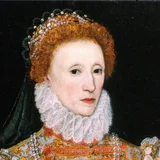
Elizabeth's prisoner
Mary hoped Elizabeth would help her, but Elizabeth suspected her of wanting the English throne and kept her prisoner for 20 years. Mary was eventually executed, accused of plotting against Elizabeth I.
- 1603
 1603
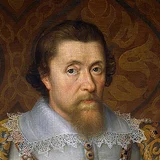
James VI becomes James I
Elizabeth I never married and had no children. When she died, her heir, James VI of Scotland, became King James I of England, Wales and Ireland. Scotland remained a separate country.
- James IJames I
The King James Bible
A new translation of the Bible into English, known as the King James Version or the Authorised Version. It was not the first English Bible, but many Protestant churches still use it.
Ireland under Elizabeth I and James I
Ireland was an almost completely Catholic country. Many people opposed rule by England's Protestant government, and there were a number of rebellions.
The English government encouraged Scottish and English Protestants to settle in Ulster, the northern province of Ireland, on land taken from Catholic landholders. These settlements were called plantations.
Many settlers came from south-west Scotland; other land was given to companies based in London. James I later organised similar plantations in other parts of Ireland.
Read the full story (4 min)Optional: the facts above, told in order as one read.
Elizabeth I, the younger daughter of Henry VIII, was a Protestant. She re-established the Church of England as the official Church. Everyone had to attend their local church and there were laws about religious services and prayers, but Elizabeth did not ask about people’s real beliefs. She succeeded in finding a balance between the views of Catholics and the more extreme Protestants, avoiding serious religious conflict within England.
Elizabeth became one of the most popular monarchs in English history, particularly after 1588, when the English defeated the Spanish Armada — a large fleet of ships sent by Spain to conquer England and restore Catholicism.
The Elizabethan period was a time of growing patriotism: a feeling of pride in being English. English explorers sought new trade routes and tried to expand British trade into the Spanish colonies in the Americas. Sir Francis Drake, one of the commanders in the defeat of the Spanish Armada, was one of the founders of England’s naval tradition. His ship, the Golden Hind, was one of the first to sail right around (‘circumnavigate’) the world. In Elizabeth I’s time, English settlers first began to colonise the eastern coast of America.
William Shakespeare (1564–1616) was born in Stratford-upon-Avon. He was a playwright and actor who wrote many poems and plays; his most famous plays include A Midsummer Night’s Dream, Hamlet, Macbeth and Romeo and Juliet. He dramatised past events but was one of the first to portray ordinary English men and women. He had a great influence on the English language and invented many words that are still common today. Many people regard him as the greatest playwright of all time.
Lines from Shakespeare’s plays and poems that are still often quoted include: ‘Once more unto the breach’ (Henry V), ‘To be or not to be’ (Hamlet), ‘A rose by any other name’ (Romeo and Juliet), ’All the world’s a stage’ (As You Like It) and ‘The darling buds of May’ (Sonnet 18).
Shakespeare’s plays and poems are still performed and studied in Britain and other countries today. The Globe Theatre in London is a modern copy of the theatres in which his plays were first performed.
Scotland had also been strongly influenced by Protestant ideas. In 1560, the mainly Protestant Scottish Parliament abolished the authority of the Pope in Scotland and Roman Catholic religious services became illegal. A Protestant Church of Scotland with an elected leadership was established but, unlike in England, this was not a state Church.
The queen of Scotland, Mary Stuart (often now called Mary, Queen of Scots), was a Catholic. She was only a week old when her father died and she became queen, and much of her childhood was spent in France. When she returned to Scotland she was at the centre of a power struggle. When her husband was murdered, Mary was suspected of involvement and fled to England.
Mary gave her throne to her Protestant son, James VI of Scotland. Mary was Elizabeth I’s cousin and hoped that Elizabeth might help her, but Elizabeth suspected Mary of wanting to take over the English throne and kept her prisoner for 20 years. Mary was eventually executed, accused of plotting against Elizabeth I.
Elizabeth I never married and had no children. When she died in 1603, her heir was James VI of Scotland, who became James I of England, Wales and Ireland. Scotland remained a separate country.
One achievement of James I’s reign was a new translation of the Bible into English, known as the King James Version or the Authorised Version. It was not the first English Bible but continues to be used in many Protestant churches today.
During this period, Ireland was an almost completely Catholic country. During the reigns of Elizabeth I and James I, many people in Ireland opposed rule by the Protestant government in England, and there were a number of rebellions. The English government encouraged Scottish and English Protestants to settle in Ulster, the northern province of Ireland, taking over the land from Catholic landholders. These settlements were known as plantations. Many of the new settlers came from south-west Scotland, and other land was given to companies based in London. James later organised similar plantations in several other parts of Ireland.
Do not mix up
Practise
Check this topic
Preparing three random questions from this topic.