
In this topic
What to be able to answer
- Name each Prime Minister from Thatcher to Johnson and what each is remembered for.
- Know Blair's devolution, the Good Friday Agreement and the road to leaving the EU.
- Match each 20th-century invention to its inventor and date.
- Recognise Roald Dahl and his best-known books.
Learn
Thatcher to Brexit, devolution, and great British inventions of the 20th century
Britain since 1979
The governments in power, and Britain's place in Europe and the world.
Governments since 1979
- 1979Margaret Thatcher, Conservative
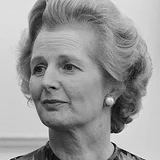
Britain's first woman Prime Minister (1979–90) and the longest-serving of the 20th century. A grocer's daughter from Grantham, Lincolnshire, she became an MP in 1959. Her government privatised nationalised industries and put legal controls on trade union powers. She worked closely with US President Ronald Reagan.
- 1982The Falklands
Argentina invaded the Falkland Islands, a British overseas territory in the South Atlantic. A naval taskforce sent from the UK recovered them.
- 1990John Major, Conservative
Followed Thatcher and helped establish the Northern Ireland peace process.
- 1997Tony Blair, Labour
Introduced a Scottish Parliament and a Welsh Assembly, now called the Senedd. The Good Friday Agreement was signed in 1998, and a Northern Ireland Assembly was elected in 1999.
- 2007Gordon Brown, Labour
Took over from Tony Blair and led the government until 2010.
- 2010David Cameron and a coalition
No party won a majority, so the Conservatives and Liberal Democrats formed a coalition under Conservative leader David Cameron. The Conservatives won a majority in 2015.
- 2016EU referendum
Called by the Conservative government. On 23 June 2016 the UK voted by 51.9% to 48.1% to leave the European Union.
- 2016Theresa May, then Boris Johnson
Theresa May followed Cameron after the referendum; Boris Johnson succeeded her in July 2019.
Europe and the world
- 1990Kuwait and Yugoslavia
Britain helped lead coalition forces that freed Kuwait after Iraq invaded it, and served in the conflict in the former Yugoslavia.
- 1993The European Union
The EEC became part of the new European Union. The UK was a full member but never used the euro.
- 2000sAfghanistan and Iraq
British forces fought against international terrorism, including in Afghanistan and Iraq. British combat troops left Iraq in 2009.
- 2020The UK leaves the EU
The UK formally left the European Union on 31 January 2020, leaving 27 member countries.
Roald Dahl (1916–90) was born in Wales to Norwegian parents. He served in the Royal Air Force during the Second World War. His best-known works include Charlie and the Chocolate Factory and George's Marvellous Medicine. Several of his books have been made into films.
Great British inventions of the 20th century
Match each invention to its inventor, then its decade.
Communication and computing
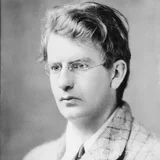
Television
1920sDeveloped by the Scot John Logie Baird, who made the first television broadcast between London and Glasgow in 1932.
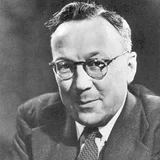
Radar
1935Developed by the Scot Sir Robert Watson-Watt, who showed that enemy aircraft could be detected by radio waves. First successful test in 1935.
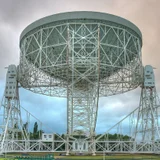
Radio telescope
Built by Sir Bernard Lovell at Jodrell Bank, Cheshire; for many years the biggest in the world.
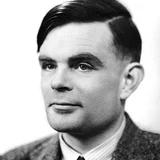
Turing machine
1930sA theoretical mathematical device by Alan Turing that influenced computer science and the modern computer.
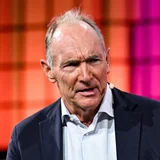
World Wide Web
1990Invented by Sir Tim Berners-Lee. Information was first transferred via the web on 25 December 1990.
Medicine and science
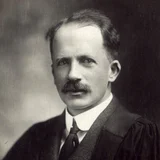
Insulin
Co-discovered by the Scottish physician John Macleod; used to treat diabetes.
Structure of DNA
1953Discovered through work at universities in London and Cambridge. Francis Crick shared the Nobel Prize for it.
IVF
1978Pioneered by Sir Robert Edwards and Patrick Steptoe. The world's first 'test-tube baby' was born in Oldham, Lancashire.

Cloning a mammal
1996Sir Ian Wilmut and Keith Campbell led the team that cloned Dolly the sheep.
The handbook spells his name Wilmot.
MRI scanner
Co-invented by Sir Peter Mansfield.
Engineering and transport
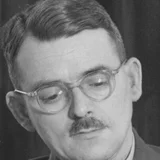
Jet engine
1930sDeveloped by Sir Frank Whittle, an RAF engineer officer.
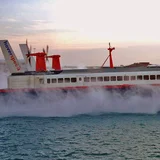
Hovercraft
1950sInvented by Sir Christopher Cockerell.
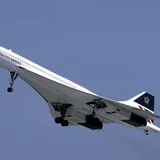
Concorde
1969Britain and France developed the world's only supersonic passenger airliner in the 1960s. It first flew in 1969, carried passengers from 1976 and retired in 2003.
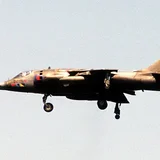
Harrier jump jet
Designed and developed in the UK; it can take off vertically.
Cash machine (ATM)
1967Invented by James Goodfellow in the 1960s. Barclays put the first into use in Enfield, north London.
Image credits: Mike Peel (2007), CC BY-SA 4.0, via Wikimedia Commons; Web Summit (2025), CC BY 4.0, via Wikimedia Commons; Toni Barros (2009), CC BY-SA 2.0, via Wikimedia Commons; Andrew Berridge (2000), CC BY-SA 2.5, via Wikimedia Commons; Eduard Marmet (1986), CC BY-SA 3.0, via Wikimedia Commons.
Read the full story (3 min)Optional: the facts above, told in order as one read.
Margaret Thatcher (1925–2013), a grocer’s daughter from Grantham in Lincolnshire, became a Conservative MP in 1959. As Britain’s first woman Prime Minister, she led the Conservative government from 1979 to 1990, the longest-serving Prime Minister of the 20th century. Her government privatised nationalised industries and imposed legal controls on trade union powers, and she worked closely with US President Ronald Reagan. In 1982, Argentina invaded the Falkland Islands and a British naval taskforce recovered the islands. John Major succeeded Thatcher and helped establish the Northern Ireland peace process.
In 1997, Tony Blair’s Labour government introduced a Scottish Parliament and a Welsh Assembly (now called the Senedd). In Northern Ireland, the Good Friday Agreement was signed in 1998 and the Assembly was elected in 1999. Gordon Brown took over as Prime Minister in 2007. Abroad, Britain played a leading role in the 1990s in coalition forces that liberated Kuwait after Iraq invaded it in 1990, and in the conflict in the former Yugoslavia. Since 2000, British armed forces have been engaged in conflicts in Afghanistan and Iraq; British combat troops left Iraq in 2009.
In May 2010, no party won an overall majority and the Conservative and Liberal Democrat parties formed a coalition, with Conservative leader David Cameron as Prime Minister. The Conservatives won a majority in 2015. The Conservative government called a referendum on EU membership, held on 23 June 2016: the UK voted by 51.9% to 48.1% to leave. Theresa May became Prime Minister after the referendum, followed by Boris Johnson in July 2019. The UK formally left the European Union on 31 January 2020.
The EEC had become part of the European Union when the EU was formed in 1993. The UK was a full member but did not use the Euro currency, and its departure on 31 January 2020 left 27 member countries in the EU.
Roald Dahl (1916–90) was born in Wales to Norwegian parents. He served in the Royal Air Force during the Second World War. His best-known works include Charlie and the Chocolate Factory and George’s Marvellous Medicine. Several of his books have been made into films.
Britain and France developed Concorde, the world’s only supersonic commercial airliner, in the 1960s. It first flew in 1969, began carrying passengers in 1976 and was retired from service in 2003.
Britain has produced many important inventions. The television was developed by John Logie Baird in the 1920s, and in 1932 he made the first television broadcast between London and Glasgow. Radar was developed by Sir Robert Watson-Watt, who proposed that enemy aircraft could be detected by radio waves; the first successful test was in 1935. Sir Bernard Lovell built the radio telescope at Jodrell Bank in Cheshire, for many years the biggest in the world. Alan Turing invented the Turing machine in the 1930s, a theoretical device that was influential in the development of computer science. John Macleod was the co-discoverer of insulin, used to treat diabetes.
The structure of DNA was discovered in 1953 through work at British universities in London and Cambridge; Francis Crick (1916–2004) was one of those awarded the Nobel Prize for the discovery. Sir Frank Whittle, a Royal Air Force engineer officer, developed the jet engine in Britain in the 1930s. Sir Christopher Cockerell invented the hovercraft in the 1950s. The Harrier jump jet, capable of taking off vertically, was designed and developed in the UK.
In the 1960s, James Goodfellow (1937–) invented the cash-dispensing ATM. The first was put into use in 1967 by Barclays Bank in Enfield, north London. IVF therapy was pioneered by Sir Robert Edwards and Patrick Steptoe; the world’s first ‘test-tube baby’ was born in Oldham, Lancashire, in 1978. In 1996, Sir Ian Wilmut (spelt ‘Wilmot’ in the official handbook) and Keith Campbell led the team that first cloned a mammal, Dolly the sheep. Sir Peter Mansfield co-invented the MRI scanner.
Sir Tim Berners-Lee, a British inventor, created the World Wide Web. Information was successfully transferred via the web for the first time on 25 December 1990.
Do not mix up
Practise
Check this topic
Preparing three random questions from this topic.