
In this topic
What to be able to answer
- Know where slaves were taken from and to, and the abolition sequence: Quakers, Wilberforce, 1807 and the 1833 Emancipation Act.
- Separate American independence (1776, 1783) from the wars with France (1789, Trafalgar 1805, Waterloo 1815).
- Recognise the three crosses of the Union Flag, or Union Jack, and why the Welsh dragon is missing.
Learn
Abolition, revolution and the battles that shaped modern Britain
The slave trade, American independence and war with France
Three separate stories from the 18th and early 19th centuries.
The slave trade and abolition
- Slavery was illegal within Britain, but by the 18th century the overseas slave trade was a fully established industry, dominated by Britain and the American colonies.
- Slaves came mainly from West Africa. British ships carried them in terrible conditions to America and the Caribbean to work on tobacco and sugar plantations. Many tried to escape or revolted.
- The Quakers set up the first formal anti-slavery groups in the late 1700s and petitioned Parliament.
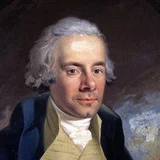 William Wilberforce, an evangelical Christian and MP, helped turn public opinion against the slave trade.
- 1807: trading slaves in British ships or from British ports became illegal.
- 1833: the Emancipation Act abolished slavery throughout the British Empire. The Royal Navy stopped other countries' slave ships and freed the slaves.
- After 1833, 2 million Indian and Chinese workers replaced the freed slaves, on Caribbean sugar plantations, in South African mines, on East African railways and in the army in Kenya.
American independence
- By the 1760s the North American colonies were wealthy and largely ran their own affairs. Many families had gone there for religious freedom.
- When the British government tried to tax them, colonists demanded 'no taxation without representation' in Parliament.
- 1776: 13 American colonies declared independence, saying people had a right to set up their own governments.
- 1783: after the colonists defeated the British army, Britain recognised their independence.
Wars with France
- Britain fought a number of wars with France during the 18th century.
- 1789: a revolution in France. The new French government declared war on Britain, and Napoleon, who became Emperor, continued it.
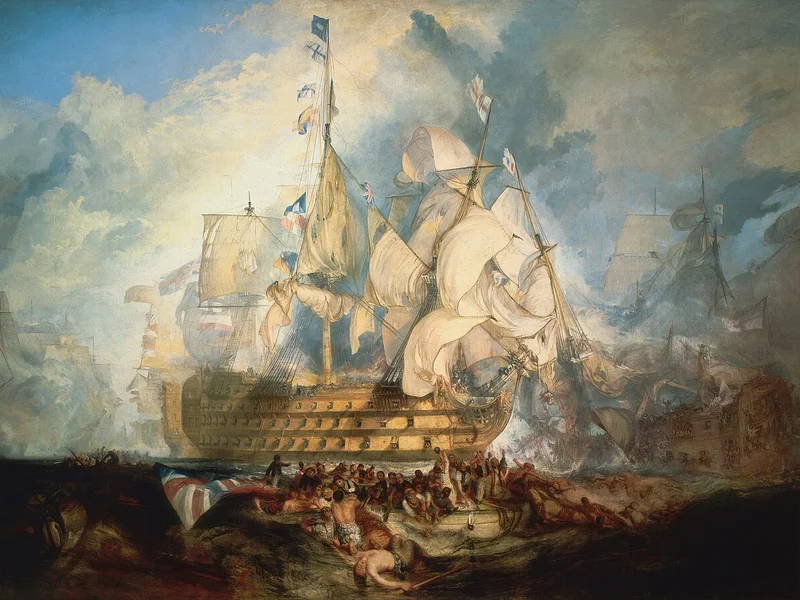
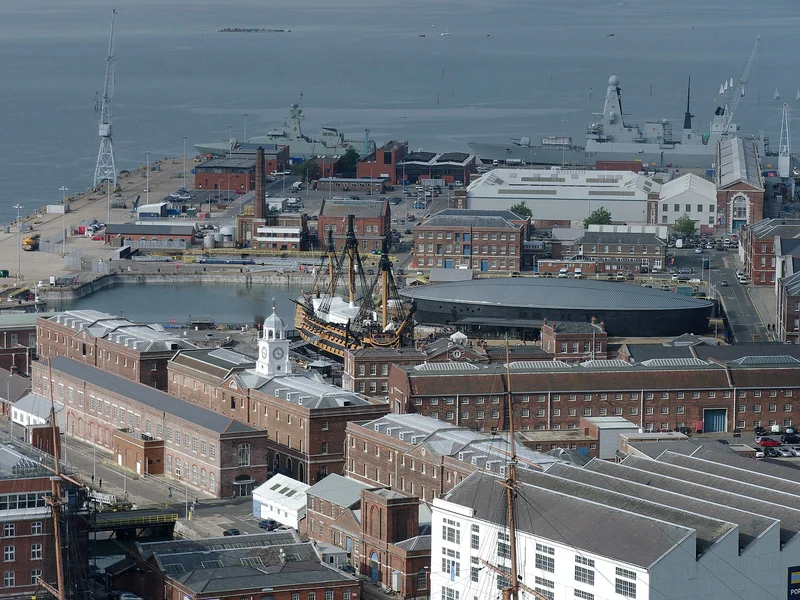
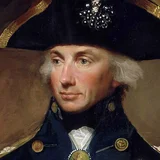 1805, Battle of Trafalgar: Admiral Nelson's navy beat the combined French and Spanish fleets, but Nelson was killed. Nelson's Column in Trafalgar Square, London, is his monument; his ship, HMS Victory, is in Portsmouth.
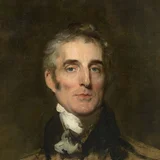 1815, Battle of Waterloo: the Duke of Wellington, known as the Iron Duke, defeated Napoleon and ended the French Wars. Wellington later became Prime Minister.
How the Union Flag is built
Three crosses for three patron saints, and no Welsh dragon.
1801: the Act of Union of 1800 joined Ireland with England, Scotland and Wales as the United Kingdom of Great Britain and Ireland. Its new flag, the Union Flag, often called the Union Jack, is still the UK's official flag.
ENGCross of St George
Patron saint of England. Red cross on a white ground.
SCOCross of St Andrew
Patron saint of Scotland. Diagonal white cross on a blue ground.
IRECross of St Patrick
Patron saint of Ireland. Diagonal red cross on a white ground.
Wales has its own flag with a Welsh dragon, but the dragon is not on the Union Flag: Wales was already united with England when the first Union Flag was created in 1606 from the flags of England and Scotland.
Read the full story (3 min)Optional: the facts above, told in order as one read.
The commercial expansion and prosperity of the 18th century was sustained in part by the booming slave trade. While slavery was illegal within Britain itself, by the 18th century it was a fully established overseas industry, dominated by Britain and the American colonies.
Slaves came primarily from West Africa. Travelling on British ships in terrible conditions, they were taken to America and the Caribbean, where they were made to work on tobacco and sugar plantations. The living and working conditions for slaves were very bad. Many slaves tried to escape and others revolted against their owners.
The first formal anti-slavery groups were set up by the Quakers in the late 1700s, and they petitioned Parliament to ban the practice. William Wilberforce, an evangelical Christian and a member of Parliament, also played an important part in changing the law. Along with other abolitionists, he succeeded in turning public opinion against the slave trade.
In 1807, it became illegal to trade slaves in British ships or from British ports, and in 1833 the Emancipation Act abolished slavery throughout the British Empire. The Royal Navy stopped slave ships from other countries, freed the slaves and punished the slave traders. After 1833, 2 million Indian and Chinese workers were employed to replace the freed slaves. They worked on sugar plantations in the Caribbean, in mines in South Africa, on railways in East Africa and in the army in Kenya.
By the 1760s, there were substantial British colonies in North America. The colonies were wealthy and largely in control of their own affairs. Many of the colonist families had originally gone to North America in order to have religious freedom. They were well educated and interested in ideas of liberty.
The British government wanted to tax the colonies. The colonists saw this as an attack on their freedom and said there should be ‘no taxation without representation’ in the British Parliament. Fighting broke out between the colonists and the British forces. In 1776, 13 American colonies declared their independence, stating that people had a right to establish their own governments. The colonists eventually defeated the British army and Britain recognised the colonies’ independence in 1783.
During the 18th century, Britain fought a number of wars with France. In 1789, there was a revolution in France and the new French government soon declared war on Britain. Napoleon, who became Emperor of France, continued the war.
Britain’s navy fought against the combined French and Spanish fleets, winning the Battle of Trafalgar in 1805. Admiral Nelson was in charge of the British fleet at Trafalgar and was killed in the battle. Nelson’s Column in Trafalgar Square, London, is a monument to him. His ship, HMS Victory, can be visited in Portsmouth.
In 1815, the French Wars ended with the defeat of the Emperor Napoleon by the Duke of Wellington at the Battle of Waterloo. Wellington was known as the Iron Duke and later became Prime Minister.
In 1801, Ireland became unified with England, Scotland and Wales after the Act of Union of 1800, creating the United Kingdom of Great Britain and Ireland. One symbol of this union was a new version of the official flag, the Union Flag (often called the Union Jack). It is still the official flag of the UK.
The Union Flag consists of three crosses: the cross of St George, patron saint of England, a red cross on a white ground; the cross of St Andrew, patron saint of Scotland, a diagonal white cross on a blue ground; and the cross of St Patrick, patron saint of Ireland, a diagonal red cross on a white ground.
The Welsh dragon does not appear on the Union Flag because, when the first Union Flag was created in 1606 from the flags of Scotland and England, the Principality of Wales was already united with England.
Do not mix up
Practise
Check this topic
Preparing three random questions from this topic.