
In this topic
What to be able to answer
- Know the causes: Divine Right, money, religion and control of the army.
- Follow 1642–1660: Cavaliers and Roundheads, Charles I's execution and the Commonwealth.
- Place Cromwell in Ireland and at Dunbar and Worcester, then as Lord Protector of an 11-year republic.
Learn
King versus Parliament, Cromwell and the republic
James I and his son Charles I both believed in the ‘Divine Right of Kings’ — the idea that the king was directly appointed by God to rule and should be able to act without seeking approval from Parliament.
When Charles I inherited the throne, he tried to rule in line with this principle. When he could not get Parliament to agree with his religious and foreign policies, he tried to rule without Parliament at all. For 11 years, he found ways to raise money without Parliament's approval.
Charles I wanted the Church of England to include more ceremony and introduced a revised Prayer Book. He tried to impose this Prayer Book on the Presbyterian Church in Scotland, which led to serious unrest. A Scottish army was formed, and Charles could not fund his own army without Parliament's help.
In 1640, Charles recalled Parliament to ask for funds. Many in Parliament were Puritans — Protestants who advocated strict and simple religious doctrine. They did not agree with the king's religious views and refused to give him the money he asked for, even after the Scottish army invaded England.
A rebellion began in Ireland because Roman Catholics feared the growing power of the Puritans. Parliament took this opportunity to demand control of the English army. In response, Charles I entered the House of Commons and tried to arrest five parliamentary leaders, but they had been warned and were not there. No monarch has set foot in the Commons since.
English Civil War, 1642–1660
From king against Parliament, to a republic, and back to a king.
- 1642
Civil War begins
The country split: the Cavaliers supported the king; the Roundheads supported Parliament.
- 1644–45Parliament and republic
Marston Moor and Naseby
Parliament's army defeated the king's army in both battles.
- 1646Parliament and republic
Parliament has won
Charles I was held prisoner but still refused to reach any agreement with Parliament.
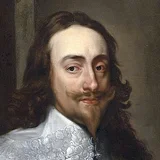 1649Execution
Charles I executed
England declared itself a republic, called the Commonwealth, with no monarch.
- 1649–50Parliament and republic
Cromwell in Ireland
Oliver Cromwell established the English Parliament's authority over an Irish revolt, but so violently that he is still a controversial figure in Ireland.
- 1650–51Parliament and republic
Dunbar and Worcester
The Scots crowned Charles I's son Charles II and invaded England. Cromwell defeated them at Dunbar and Worcester; Charles II hid in an oak tree and escaped to Europe.
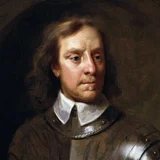 1653Parliament and republic
Cromwell becomes Lord Protector
He led the republic as Lord Protector, never as king.
- 1658Parliament and republic
Cromwell dies
His son Richard became Lord Protector but could not control the army or the government.
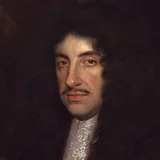 1660King's side
Restoration
After 11 years as a republic, people wanted stability. Parliament invited Charles II back as king.
Read the full story (2 min)Optional: the facts above, told in order as one read.
James I and his son Charles I both believed in the ‘Divine Right of Kings’ — the idea that the king was directly appointed by God to rule and should be able to act without seeking approval from Parliament.
When Charles I inherited the throne, he tried to rule in line with this principle. When he could not get Parliament to agree with his religious and foreign policies, he tried to rule without Parliament at all. For 11 years, he found ways to raise money without Parliament’s approval.
Charles I wanted the Church of England to include more ceremony and introduced a revised Prayer Book. He tried to impose this Prayer Book on the Presbyterian Church in Scotland, which led to serious unrest. A Scottish army was formed, and Charles could not fund his own army without Parliament’s help.
In 1640, Charles recalled Parliament to ask for funds. Many in Parliament were Puritans — Protestants who advocated strict and simple religious doctrine. They did not agree with the king’s religious views and refused to give him the money he asked for, even after the Scottish army invaded England.
A rebellion began in Ireland because Roman Catholics feared the growing power of the Puritans. Parliament took this opportunity to demand control of the English army. In response, Charles I entered the House of Commons and tried to arrest five parliamentary leaders, but they had been warned and were not there. No monarch has set foot in the Commons since.
Civil war began in 1642. The country split into those who supported the king — the Cavaliers — and those who supported Parliament — the Roundheads.
The king’s army was defeated at the Battles of Marston Moor and Naseby. Charles was held prisoner and, still unwilling to reach agreement with Parliament, was executed in 1649.
England declared itself a republic called the Commonwealth, and no longer had a monarch. One of Parliament’s generals, Oliver Cromwell, was sent to Ireland, where a revolt still continued. Cromwell established the authority of the English Parliament there but did so with such violence that he remains a controversial figure in Ireland to this day.
The Scots declared Charles I’s son Charles II to be king. He was crowned king of Scotland and led a Scottish army into England. Cromwell defeated this army at the Battles of Dunbar and Worcester. Charles II escaped from Worcester, famously hiding in an oak tree on one occasion, and eventually fled to Europe.
Cromwell was recognised as leader of the republic and given the title of Lord Protector. He ruled until his death in 1658. His son Richard became Lord Protector in his place but was unable to control the army or the government. After 11 years as a republic, many people wanted stability and began to talk about the need for a king.
Do not mix up
Practise
Check this topic
Preparing three random questions from this topic.