
In this topic
What to be able to answer
- Know who fought at Hastings in 1066 and where William came from.
- Tell the two records apart: the Bayeux Tapestry and the Domesday Book.
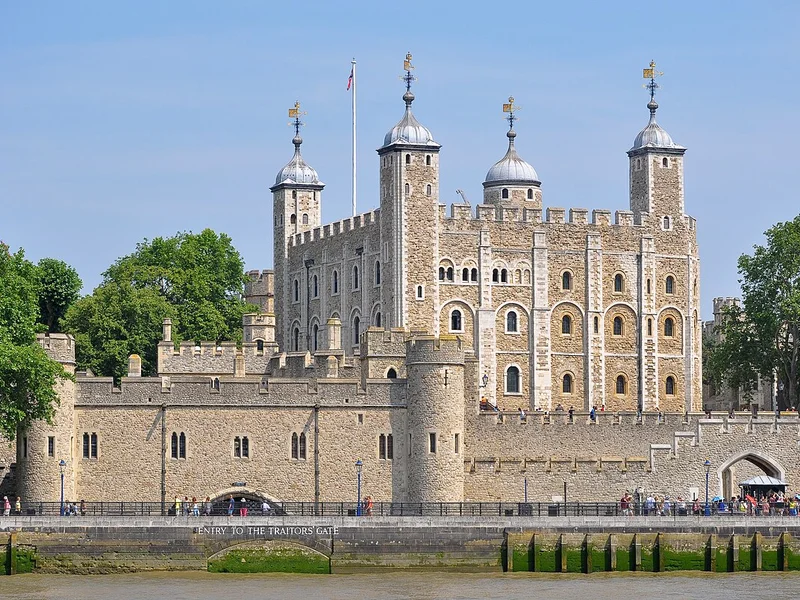
- Explain what changed: the last successful invasion, feudalism, Norman French and the Tower of London.
Learn
1066 and the transformation of England
1066 and what followed
A battle, two records of William's England, and a changed country.
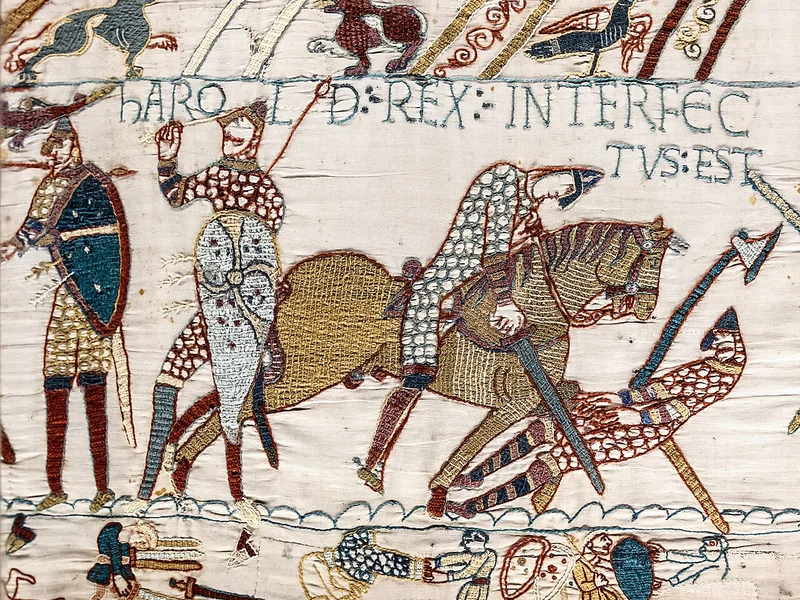
1066
Battle of Hastings
William, Duke of Normandy (in what is now northern France), defeated Harold, the Saxon king of England, who was killed in the battle. William became king and is known as William the Conqueror.
Nearly 70 m
Bayeux Tapestry
A linen cloth nearly 70 metres (230 feet) long, embroidered with coloured wool, that commemorates the battle. It can still be seen in France.
Domesday
The Domesday Book
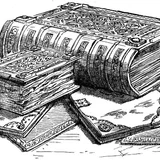
William sent people all over England to list every town and village, who lived there, who owned the land and what animals they owned. It still exists and gives a picture of society just after the Conquest.
Norman change
The last successful foreign invasion
- It changed government and social structures in England.
- The Normans used a system of land ownership known as feudalism.
- Norman French, the language of the new ruling class, mixed with the Anglo-Saxon spoken by the peasants and shaped modern English.
Initially the Normans also conquered Wales, but the Welsh gradually won territory back. The Scots and the Normans fought on the border between England and Scotland; the Normans took over some land on the border but did not invade Scotland.
Read the full story (1 min)Optional: the facts above, told in order as one read.
In 1066, an invasion led by William, the Duke of Normandy (in what is now northern France), defeated Harold, the Saxon king of England, at the Battle of Hastings. Harold was killed in the battle. William became king of England and is known as William the Conqueror.
The battle is commemorated in a great piece of embroidery, known as the Bayeux Tapestry, which can still be seen in France today. The linen cloth is nearly 70 metres (230 feet) long and is embroidered with coloured wool.
The Norman Conquest was the last successful foreign invasion of England and led to many changes in government and social structures in England. The Normans used a system of land ownership known as feudalism. Norman French, the language of the new ruling class, influenced the development of the English language as we know it today.
Initially the Normans also conquered Wales, but the Welsh gradually won territory back. The Scots and the Normans fought on the border between England and Scotland; the Normans took over some land on the border but did not invade Scotland.
William sent people all over England to draw up lists of all the towns and villages. The people who lived there, who owned the land and what animals they owned were also listed. This was called the Domesday Book. It still exists today and gives a picture of society in England just after the Norman Conquest.
Do not mix up
Practise
Check this topic
Preparing three random questions from this topic.