
In this topic
What to be able to answer
- Know Henry VIII's six wives in order: who each was, their children and how each marriage ended.
- Understand why Henry VIII set up the Church of England and what the Reformation changed.
- Put Edward VI, Mary I and Elizabeth I in order, with their religion.
Learn
Religious upheaval, six wives and the English Reformation
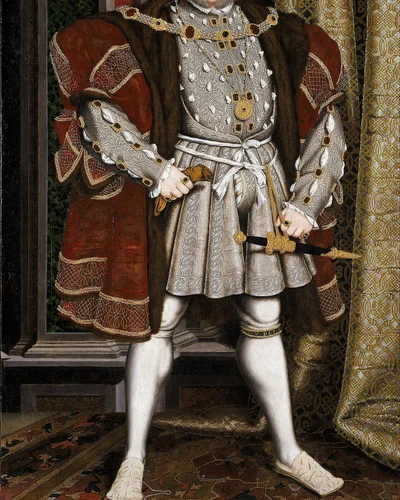
After the Battle of Bosworth Field, Henry Tudor, leader of the House of Lancaster, became King Henry VII, the first Tudor king. He married Elizabeth of York to unite the two families, and the Tudor rose, a red rose with a white rose inside, showed that the Houses of York and Lancaster were now allies. Henry VII wanted England to stay peaceful and his position as king to be secure, so he deliberately strengthened the central administration of England and reduced the power of the nobles. He was thrifty and built up the monarchy's financial reserves.
When Henry VII died, his son Henry VIII continued the policy of centralising power. Henry VIII is most famous for breaking away from the Church of Rome and marrying six times.
Henry VIII's six wives, in order
Three Catherines, two Annes and a Jane. His heirs Mary, Elizabeth and Edward each had a different mother.
Wife 1: Catherine of Aragon
A Spanish princess. Mother of Mary, her only surviving child.
Divorced: Henry wanted a son, and she was too old to give him another child.
Wife 2: Anne Boleyn
English, and unpopular in the country. Mother of Elizabeth.
Accused of taking lovers and executed at the Tower of London.
Wife 3: Jane Seymour
Married after Anne Boleyn's execution. Mother of Edward, the son Henry wanted.
Died shortly after Edward's birth.
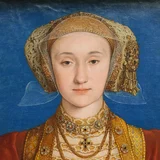
Wife 4: Anne of Cleves
A German princess, married for political reasons.
Divorced soon after.
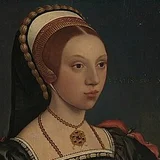
Wife 5: Catherine Howard
A cousin of Anne Boleyn.
Also accused of taking lovers, and executed.
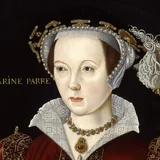
Wife 6: Catherine Parr
A widow who married Henry late in his life.
Survived him, married again, but died soon after.
To divorce his first wife, Henry needed the approval of the Pope. When the Pope refused, Henry established the Church of England. In this new church, the king — not the Pope — had the power to appoint bishops and order how people should worship.
At the same time, the Reformation was happening across Europe. This was a movement against the authority of the Pope and the ideas and practices of the Roman Catholic Church. Protestants formed their own churches. They read the Bible in their own languages instead of Latin, did not pray to saints or at shrines, and believed that a person's own relationship with God was more important than submitting to the authority of the Church. Protestant ideas gradually gained strength in England, Wales and Scotland during the 16th century.
Henry VIII and his heirs
Henry's three children ruled in turn: Edward, then Mary, then Elizabeth.
- Henry VIII
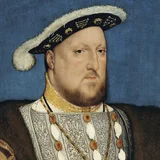 Henry VIII
Wales and Ireland
- The Act for the Government of Wales formally united Wales with England. The Welsh sent representatives to the House of Commons, and the Welsh legal system was reformed.
- With Henry VII, he extended English authority over the whole of Ireland and took the title 'King of Ireland'. English laws were introduced, and local leaders had to follow the instructions of the Lord Lieutenants in Dublin.
- Attempts to impose Protestantism in Ireland led to rebellion by Irish chieftains and much brutal fighting.
- Edward VI
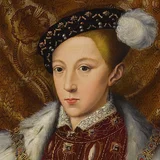 Edward VI
A strongly Protestant son
The Book of Common Prayer was written for the Church of England in his reign; a version is still used in some churches. He died aged 15, after ruling for just over six years.
- Mary I
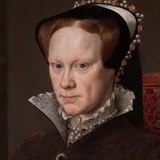 Mary I
'Bloody Mary'
Edward's half-sister was a devout Catholic who persecuted Protestants. She also died after a short reign.
- Elizabeth I
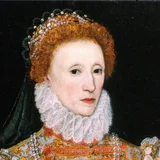 Elizabeth I
The next queen
Mary's half-sister Elizabeth, Henry VIII's younger daughter, came next.
Read the full story (3 min)Optional: the facts above, told in order as one read.
After the Battle of Bosworth Field, Henry Tudor, leader of the House of Lancaster, became King Henry VII, the first Tudor king. He married Elizabeth of York to unite the two families, and the Tudor rose, a red rose with a white rose inside, showed that the Houses of York and Lancaster were now allies. Henry VII wanted England to stay peaceful and his position as king to be secure, so he deliberately strengthened the central administration of England and reduced the power of the nobles. He was thrifty and built up the monarchy’s financial reserves.
When Henry VII died, his son Henry VIII continued the policy of centralising power. Henry VIII is most famous for breaking away from the Church of Rome and marrying six times.
Henry’s first wife was Catherine of Aragon, a Spanish princess. They had a number of children but only one, Mary, survived. When Catherine was too old to give him another child, Henry decided to divorce her, hoping another wife would give him a son and heir.
His second wife was Anne Boleyn, who was English. They had one daughter, Elizabeth. Anne was unpopular in the country and was accused of taking lovers. She was executed at the Tower of London.
Henry married Jane Seymour after Anne Boleyn’s execution. She gave him the son he wanted, Edward, but she died shortly after his birth.
His fourth wife was Anne of Cleves, a German princess. Henry married her for political reasons but divorced her soon after. His fifth wife, Catherine Howard, was a cousin of Anne Boleyn. She was also accused of taking lovers and was executed. His sixth and final wife, Catherine Parr, was a widow who married Henry later in his life. She survived him and married again but died soon after.
To divorce his first wife, Henry needed the approval of the Pope. When the Pope refused, Henry established the Church of England. In this new church, the king — not the Pope — had the power to appoint bishops and order how people should worship.
At the same time, the Reformation was happening across Europe. This was a movement against the authority of the Pope and the ideas and practices of the Roman Catholic Church. Protestants formed their own churches. They read the Bible in their own languages instead of Latin, did not pray to saints or at shrines, and believed that a person’s own relationship with God was more important than submitting to the authority of the Church. Protestant ideas gradually gained strength in England, Wales and Scotland during the 16th century.
During the reign of Henry VIII, Wales became formally united with England by the Act for the Government of Wales. The Welsh sent representatives to the House of Commons and the Welsh legal system was reformed.
Henry VII and Henry VIII extended English control outside the Pale and established English authority over the whole of Ireland. Henry VIII took the title ‘King of Ireland’. English laws were introduced and local leaders were expected to follow the instructions of the Lord Lieutenants in Dublin. Attempts to impose Protestantism led to rebellion by the Irish chieftains, and much brutal fighting followed.
Henry VIII was succeeded by his son Edward VI, who was strongly Protestant. During his reign, the Book of Common Prayer was written to be used in the Church of England. A version of this book is still used in some churches today. Edward died at the age of 15 after ruling for just over six years.
Edward’s half-sister Mary became queen. Mary was a devout Catholic and persecuted Protestants — for this reason she became known as ‘Bloody Mary’. Mary also died after a short reign, and the next monarch was her half-sister Elizabeth, the younger daughter of Henry VIII and Anne Boleyn.
Do not mix up
Practise
Check this topic
Preparing three random questions from this topic.