
In this topic
What to be able to answer
- Place each landmark in its nation.
- Attach the defining fact to each landmark and national park.
- Recall the 15 national parks and the National Trust facts.
Learn
National parks, the National Trust and UK landmarks
There are 15 national parks in England, Wales and Scotland. These are areas of protected countryside that everyone can visit, and where people live, work and look after the landscape.
Many parts of the countryside and places of interest are kept open by the National Trust (in England, Wales and Northern Ireland) and the National Trust for Scotland. Both are charities that work to preserve important buildings, coastline and countryside. The National Trust was founded in 1895 by three volunteers. There are now more than 61,000 volunteers helping to keep the organisation running.
The landmarks on the map
Find each place first. Its facts follow in the board below.
- 1LondonBig Ben, the London Eye and the Tower of London
- 2Eden Project
- 3Lake District
- 4Edinburgh Castle
- 5Loch Lomond and the Trossachs
- 6Snowdonia
- 7Giant's Causeway
Landmarks by nation
Place each landmark in its nation first, then attach its defining fact.
London
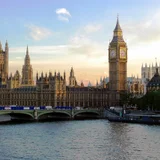
Big Ben
Nickname for the great bell of the clock at the Houses of Parliament.
- Many people call the clock Big Ben too; it is over 150 years old.
- The tower is Elizabeth Tower, named in 2012 for Queen Elizabeth II's Diamond Jubilee (60 years as Queen).
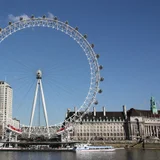
London Eye
On the southern bank of the River Thames.
- A Ferris wheel 443 feet (135 metres) tall.
- Built to celebrate the new millennium; still part of New Year celebrations.
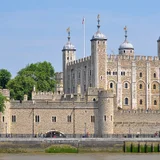
Tower of London
Tours by the Yeoman Warders, also known as Beefeaters.
- First built by William the Conqueror after he became king in 1066.
- Visitors can see the Crown Jewels.
England
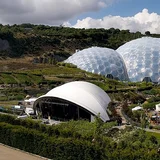
Eden Project
In Cornwall, in the south west of England.
- Its biomes, like giant greenhouses, hold plants from all over the world.
- Also a charity running environmental and social projects internationally.
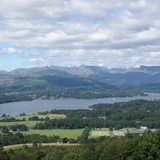
Lake District
England's largest national park (912 square miles).
- Lakes and mountains, popular with climbers, walkers and sailors; Windermere is the biggest stretch of water.
- In 2007, TV viewers voted Wastwater Britain's favourite view.
Scotland
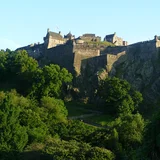
Edinburgh Castle
A dominant feature of the Edinburgh skyline.
- Its history dates back to the early Middle Ages.
- Looked after by Historic Environment Scotland.
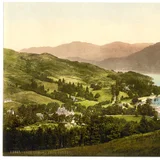
Loch Lomond and the Trossachs National Park
Loch Lomond is the largest expanse of fresh water in mainland Britain.
- In the west of Scotland; the park covers 720 square miles.
Wales
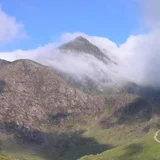
Snowdonia
A national park in North Wales (823 square miles).
- Snowdon, its best-known landmark, is the highest mountain in Wales.
Since the handbook: the park authority now uses the Welsh names Eryri and Yr Wyddfa.
Northern Ireland
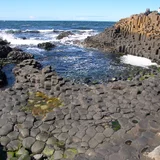
Giant's Causeway
On the north-east coast of Northern Ireland.
- Columns made from volcanic lava, formed about 50 million years ago.
- Many legends tell how it was formed.
Image credits: Tristan Sherfield, CC BY-SA 4.0, via Wikimedia Commons; Khamtran, CC BY-SA 3.0, via Wikimedia Commons; Bob Collowan, CC BY-SA 3.0, via Wikimedia Commons; Jürgen Matern, CC BY-SA 2.5, via Wikimedia Commons; Abbasi1111, CC BY 3.0, via Wikimedia Commons; Kim Traynor, CC BY-SA 3.0, via Wikimedia Commons; Bencherlite, CC BY-SA 3.0, via Wikimedia Commons; Sue Adair, CC BY-SA 2.0, via Wikimedia Commons.
Read the full explanation (2 min)Optional: the facts above, told in order as one read.
There are 15 national parks in England, Wales and Scotland. These are areas of protected countryside that everyone can visit, and where people live, work and look after the landscape.
Many parts of the countryside and places of interest are kept open by the National Trust (in England, Wales and Northern Ireland) and the National Trust for Scotland. Both are charities that work to preserve important buildings, coastline and countryside. The National Trust was founded in 1895 by three volunteers. There are now more than 61,000 volunteers helping to keep the organisation running.
Big Ben is the nickname for the great bell of the clock at the Houses of Parliament in London. Many people also call the clock itself Big Ben. The clock is over 150 years old and the clock tower is named Elizabeth Tower, in honour of Queen Elizabeth II’s Diamond Jubilee (60 years as Queen) in 2012.
The Eden Project is located in Cornwall, in the south-west of England. Its biomes (giant greenhouse structures) house plants from all over the world. It is also a charity which runs environmental and social projects internationally.
Edinburgh Castle is a dominant feature of the Edinburgh skyline. It has a long history dating back to the early Middle Ages and is looked after by Historic Environment Scotland.
The Giant’s Causeway is located on the north-east coast of Northern Ireland. It is a land formation of columns made from volcanic lava, formed about 50 million years ago. There are many legends about how it was created.
Loch Lomond and the Trossachs National Park covers 720 square miles (1,865 sq km) in the west of Scotland. Loch Lomond is the largest expanse of fresh water in mainland Britain.
The London Eye is situated on the southern bank of the River Thames. It is a Ferris wheel that is 443 feet (135 metres) tall. It was originally built as part of the UK’s celebration of the new millennium and continues to be an important part of New Year celebrations.
Snowdonia is a national park in North Wales covering 823 square miles (2,132 sq km). Its most well-known landmark is Snowdon, the highest mountain in Wales. Since the handbook, the park authority has used the Welsh names Eryri and Yr Wyddfa.
The Tower of London was first built by William the Conqueror after he became king in 1066. Tours are given by the Yeoman Warders, also known as Beefeaters. Visitors can also see the Crown Jewels there.
The Lake District is England’s largest national park, covering 912 square miles (2,362 sq km). It is famous for its lakes and mountains and is popular with climbers, walkers and sailors. The biggest stretch of water is Windermere. In 2007, television viewers voted Wastwater as Britain’s favourite view.
Do not mix up
Practise
Check this topic
Preparing three random questions from this topic.