
In this topic
What to be able to answer
- Recall the 2011 Census religion percentages.
- Separate the Church of England, the Church of Scotland, and the places with no established Church.
- Name the Protestant groups and the biggest other Christian denomination.
- Match each patron saint to nation, date and holiday status, in calendar order.
Learn
Faith communities, Christian churches and patron saints
2011 Census religion figures
The UK is historically a Christian country. Learn the two biggest groups first, then the smaller percentages.
Christian
59%
No religion
25%
Muslim
4.8%
Hindu
1.5%
Sikh
0.8%
Jewish and Buddhist
less than 0.5% each
Since the handbook: Census 2021 recorded 46% Christian and 37% no religion in England and Wales, and Scotland's 2022 census recorded 51% no religion. The 2011 figures above are the answers to learn.
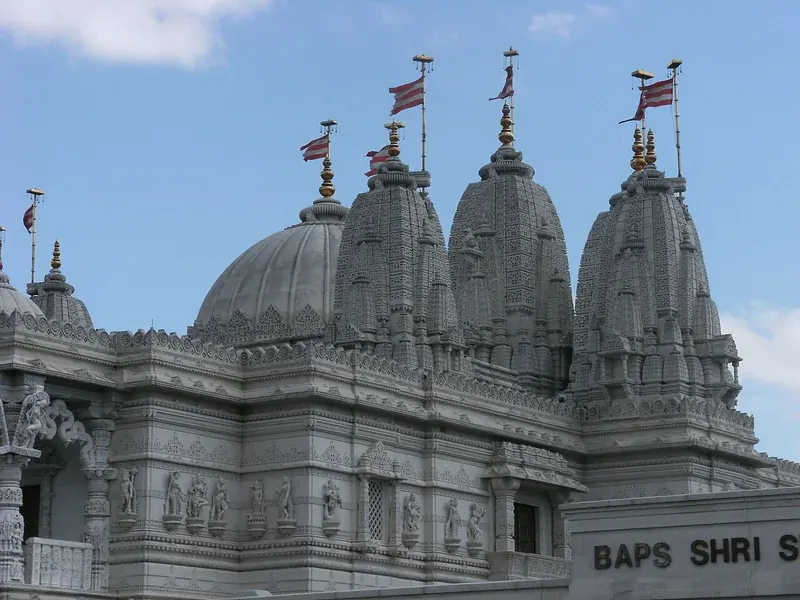
There are religious buildings for other religions all over the UK, including Islamic mosques, Hindu temples, Jewish synagogues, Sikh gurdwaras and Buddhist temples. Everyone has the legal right to choose their religion, or to choose not to practise a religion.
In England, there is a constitutional link between Church and state. The official Church of the state is the Church of England (called the Anglican Church in other countries and the Episcopal Church in Scotland and the United States). It is a Protestant Church and has existed since the Reformation in the 1530s.
The monarch is the head of the Church of England. The spiritual leader of the Church of England is the Archbishop of Canterbury. The monarch has the right to select the Archbishop and other senior church officials, but usually the choice is made by the Prime Minister and a committee appointed by the Church. Several Church of England bishops sit in the House of Lords.
In Scotland, the national Church is the Church of Scotland, which is a Presbyterian Church. It is governed by ministers and elders. The chairperson of the General Assembly of the Church of Scotland is the Moderator, who is appointed for one year only and often speaks on behalf of that Church.
There is no established Church in Wales or Northern Ireland. Other Protestant Christian groups in the UK include Baptists, Methodists, Presbyterians and Quakers. There are also other denominations of Christianity, the biggest of which is Roman Catholic.
Patron saints' days
England, Scotland, Wales and Northern Ireland each have a national saint, called a patron saint. In calendar order: two in March, one in April, one in November.
1 March
WALSt David's Day
Wales
Not a public holiday17 March
NISt Patrick's Day
Northern Ireland
Official holidayAlso celebrated across the Republic of Ireland.
23 April
ENGSt George's Day
England
Not a public holiday30 November
SCOSt Andrew's Day
Scotland
Official holidayNot all businesses and offices close.
Only Scotland and Northern Ireland have their patron saint's day as an official holiday. England and Wales still celebrate theirs with parades and small festivals.
Read the full explanation (2 min)Optional: the facts above, told in order as one read.
The UK is historically a Christian country. In the 2011 Census, 59% of people identified themselves as Christian, 4.8% as Muslim, 1.5% as Hindu, 0.8% as Sikh, less than 0.5% as Jewish, less than 0.5% as Buddhist, and 25% said they had no religion.
There are religious buildings for other religions all over the UK, including Islamic mosques, Hindu temples, Jewish synagogues, Sikh gurdwaras and Buddhist temples. Everyone has the legal right to choose their religion, or to choose not to practise a religion.
In England, there is a constitutional link between Church and state. The official Church of the state is the Church of England (called the Anglican Church in other countries and the Episcopal Church in Scotland and the United States). It is a Protestant Church and has existed since the Reformation in the 1530s.
The monarch is the head of the Church of England. The spiritual leader of the Church of England is the Archbishop of Canterbury. The monarch has the right to select the Archbishop and other senior church officials, but usually the choice is made by the Prime Minister and a committee appointed by the Church. Several Church of England bishops sit in the House of Lords.
In Scotland, the national Church is the Church of Scotland, which is a Presbyterian Church. It is governed by ministers and elders. The chairperson of the General Assembly of the Church of Scotland is the Moderator, who is appointed for one year only and often speaks on behalf of that Church.
There is no established Church in Wales or Northern Ireland. Other Protestant Christian groups in the UK include Baptists, Methodists, Presbyterians and Quakers. There are also other denominations of Christianity, the biggest of which is Roman Catholic.
England, Scotland, Wales and Northern Ireland each have a national saint, called a patron saint. Each saint has a special day: 1 March is St David’s Day (Wales), 17 March is St Patrick’s Day (Northern Ireland), 23 April is St George’s Day (England), and 30 November is St Andrew’s Day (Scotland).
Only Scotland and Northern Ireland have their patron saint’s day as an official holiday, although in Scotland not all businesses and offices will close. While the patron saints’ days are no longer public holidays in England and Wales, they are still celebrated with parades and small festivals.
Do not mix up
Practise
Check this topic
Preparing three random questions from this topic.