
People to know
Who did what: people to know for the Life in the UK test
The test often names a person and asks what they are known for. Here are 159 names, each with the work or achievement to remember and the topic that teaches it.
History makers
Rulers outside the kings and queens guide, saints, commanders, campaigners and Prime Ministers, in the order the topics teach them.
The Romans
Julius Caesar55 BC
Led the first Roman invasion of Britain in 55 BC, which was unsuccessful.
Emperor ClaudiusAD 43
Led the successful Roman invasion of Britain in AD 43, occupying almost all of the island.
Boudicca
Queen of the Iceni tribe in eastern England who fought against the Romans. Her statue stands on Westminster Bridge in London.
The Anglo-Saxons and Vikings
St Patrick
Missionary from Ireland who became the patron saint of Ireland.
St Columba
Irish missionary who founded a monastery on the island of Iona, off the coast of Scotland.
St Augustine
Led missionaries from Rome to spread Christianity in southern Britain. Became the first Archbishop of Canterbury.
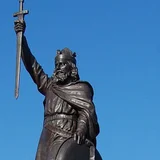
Alfred the Great
King who united the Anglo-Saxon kingdoms and defeated the Vikings.
Cnut (Canute)
The first Danish king of England.
Kenneth MacAlpin
United the Scottish people under one king; the term 'Scotland' began to be used during his reign.
The Norman Conquest
Haroldd. 1066
The Saxon king of England who was killed at the Battle of Hastings.
The Middle Ages
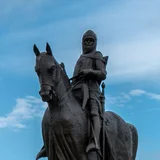
Robert the Bruce1314
Led the Scots to victory over the English at the Battle of Bannockburn, keeping Scotland unconquered.
The Tudors
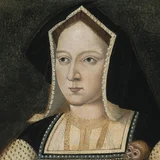
Catherine of Aragon
Spanish princess and Henry VIII's first wife. Mother of Mary I. Divorced when she could not produce a male heir.
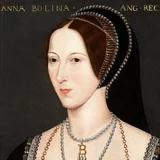
Anne Boleyn
Henry VIII's second wife and mother of Elizabeth I. Accused of taking lovers and executed at the Tower of London.
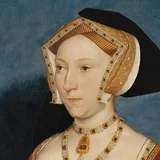
Jane Seymour
Henry VIII's third wife. Gave birth to his son Edward VI but died shortly after.
Elizabeth I and the Stuarts
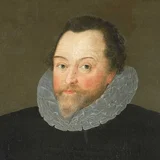
Sir Francis Drake
One of the commanders in the defeat of the Spanish Armada and a founder of England's naval tradition. His ship, the Golden Hind, was one of the first to sail around the world.
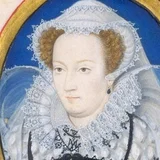
Mary, Queen of Scots
Catholic queen of Scotland and Elizabeth I's cousin. She fled to England, was imprisoned by Elizabeth for 20 years, and was executed, accused of plotting against her.
The Civil War
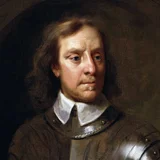
Oliver Cromwell
Parliamentary general who won the Civil War and became Lord Protector of the republic. His violent campaign in Ireland remains controversial. Ruled until his death in 1658.
A Global Power
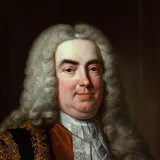
Sir Robert Walpole
The first man to be called Prime Minister. Held office from 1721 to 1742, under George I and George II.
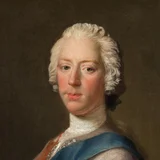
Bonnie Prince Charlie (Charles Edward Stuart)
Grandson of James II. Landed in Scotland in 1745 and raised an army of Highland clansmen; George II's army defeated him at Culloden in 1746.
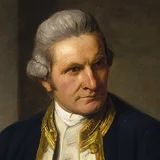
Captain James Cook
Mapped the coast of Australia, and a few colonies were set up there.
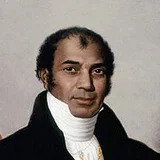
Sake Dean Mahomet1759–1851
Born in Bengal, India. Opened the Hindoostane Coffee House in London in 1810 — the first curry house in Britain. Also introduced 'shampooing' (Indian head massage) to Britain.
The Slave Trade, American Independence and War with France
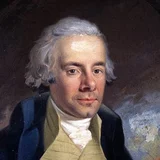
William Wilberforce
Evangelical Christian MP who campaigned against the slave trade. Helped secure the 1807 ban on trading slaves from British ships and ports.
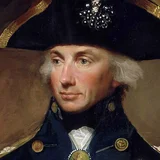
Admiral Nelson
Commander of the British fleet at the Battle of Trafalgar (1805). Killed in the battle. Commemorated by Nelson's Column in Trafalgar Square.
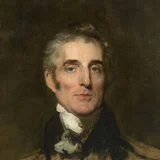
Duke of Wellington1769–1852
Known as the 'Iron Duke'. Defeated Napoleon at the Battle of Waterloo (1815). Later became Prime Minister.
The Victorian Age
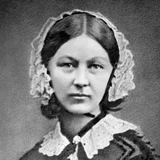
Florence Nightingale1820–1910
Nursed soldiers in the Crimean War. Established the Nightingale Training School at St Thomas' Hospital. Regarded as the founder of modern nursing.
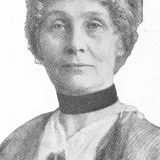
Emmeline Pankhurst1858–1928
Born in Manchester. Set up the Women's Franchise League (1889) and helped found the WSPU (suffragettes) in 1903. Campaigned for women's right to vote using civil disobedience. Women over 30 gained the vote in 1918; equal voting age of 21 achieved in 1928.
The World Wars
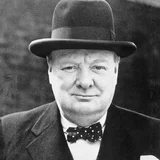
Winston Churchill1874–1965
Conservative MP from 1900 and PM from May 1940. Refused to surrender to the Nazis and made iconic wartime speeches. Lost the 1945 election, returned as PM in 1951. Voted greatest Briton in 2002.
Post-war Britain
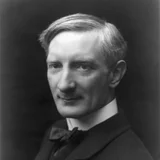
William Beveridge1879–1963
Economist and reformer. His 1942 Beveridge Report identified five 'Giant Evils' and provided the basis for the modern welfare state.
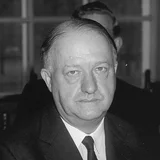
R. A. Butler
Conservative MP who oversaw the Education Act 1944 (the Butler Act): free secondary education in England and Wales, and the split between primary and secondary schools.
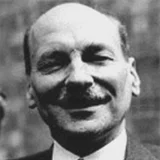
Clement Attlee1883–1967
Labour PM 1945–51. Nationalised major industries, introduced the welfare state, and established the NHS.
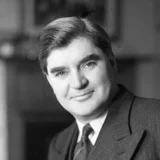
Aneurin (Nye) Bevan1897–1960
Minister for Health who led the establishment of the NHS in 1948, guaranteeing free health care at the point of use.
Modern Britain
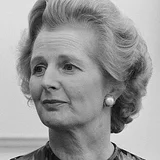
Margaret Thatcher1925–2013
From Grantham, Lincolnshire; Conservative MP from 1959. First woman Prime Minister (1979–90) and the longest-serving of the 20th century. Privatised nationalised industries, controlled trade unions, worked with Ronald Reagan, and led the recovery of the Falkland Islands in 1982.
John Major
Conservative. Followed Thatcher in 1990 and helped establish the Northern Ireland peace process.
Tony Blair
Labour, from 1997. Introduced a Scottish Parliament and a Welsh Assembly, now called the Senedd; the Good Friday Agreement was signed in 1998.
Gordon Brown
Labour. Took over from Tony Blair in 2007 and led the government until 2010.
David Cameron
Conservative leader of the 2010 coalition with the Liberal Democrats. The Conservatives won a majority in 2015.
Theresa May
Followed Cameron after the 2016 EU referendum.
Boris Johnson
Succeeded Theresa May in July 2019.
Since the handbook: Liz Truss (2022), Rishi Sunak (2022–24), Keir Starmer (2024–26) and Andy Burnham, Prime Minister since 20 July 2026. Exam questions follow the handbook, which ends with Boris Johnson.
Other Festivals and Traditions
Guy Fawkes
Led a group of Catholics who, in 1605, failed in their plan to kill the Protestant king with a bomb in the Houses of Parliament. Bonfire Night, 5 November, began with that event.
Image credits: Martin Kraft (2014), CC BY-SA 3.0, via Wikimedia Commons.
Jump to another groupScientists, inventors and thinkers
From Newton and the Scottish Enlightenment to the inventions of the 20th century.
The Restoration and Glorious Revolution
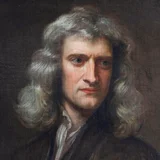
Isaac Newton1643–1727
Studied at Cambridge. Showed how gravity applies universally in Principia Mathematica and discovered that white light is made up of the colours of the rainbow.
A Global Power
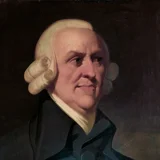
Adam Smith
Scottish Enlightenment thinker who developed influential ideas about economics.
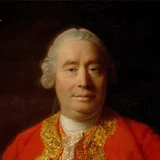
David Hume
Scottish Enlightenment philosopher whose ideas about human nature continue to influence philosophy.
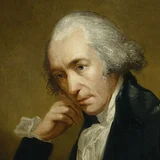
James Watt
Scottish engineer whose work on steam power was instrumental in driving the Industrial Revolution.
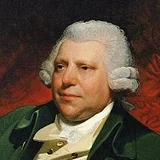
Richard Arkwright1732–92
Originally a barber, he became a textile pioneer who improved the carding machine and used steam-powered mills. Remembered for running factories efficiently and profitably.
The Victorian Age
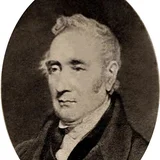
George and Robert Stephenson
Father and son who pioneered the railway engine; railways spread across Britain and the Empire.
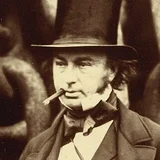
Isambard Kingdom Brunel1806–59
Engineer who built the Great Western Railway, Clifton Suspension Bridge, and many other tunnels, bridges and ships.
The World Wars
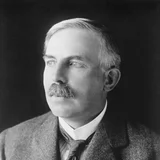
Ernest Rutherford
New Zealand-born. Scientists he led, at Manchester and then Cambridge, were the first to split the atom.
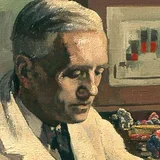
Alexander Fleming1881–1955
Scottish-born scientist who discovered penicillin in 1928 while researching influenza. Won the Nobel Prize in Medicine in 1945.
Modern Britain
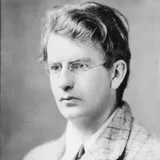
John Logie Baird
Developed television in the 1920s and made the first television broadcast between London and Glasgow in 1932.
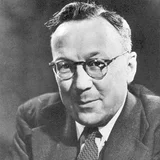
Sir Robert Watson-Watt
Developed radar, showing that enemy aircraft could be detected by radio waves. First successful test in 1935.
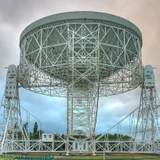
Sir Bernard Lovell
Built the radio telescope at Jodrell Bank, Cheshire; for many years the biggest in the world.
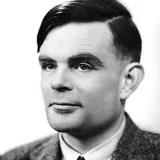
Alan Turing
The Turing machine (1930s), a theoretical mathematical device that influenced computer science and the modern computer.
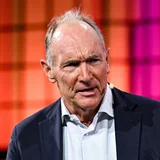
Sir Tim Berners-Lee
Invented the World Wide Web. Information was first transferred via the web on 25 December 1990.
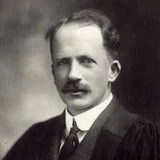
John Macleod
Scottish physician who co-discovered insulin, used to treat diabetes.
Francis Crick
Shared the Nobel Prize for the structure of DNA (1953), discovered through work at universities in London and Cambridge.
Sir Robert Edwards and Patrick Steptoe
Pioneered IVF. The world's first 'test-tube baby' was born in Oldham, Lancashire, in 1978.
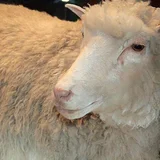
Sir Ian Wilmut and Keith Campbell
Led the team that cloned Dolly the sheep in 1996.
The handbook spells his name Wilmot.
Sir Peter Mansfield
Co-invented the MRI scanner.
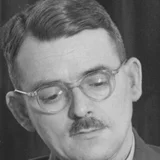
Sir Frank Whittle
RAF engineer officer who developed the jet engine in the 1930s.
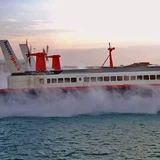
Sir Christopher Cockerell
Invented the hovercraft in the 1950s.
James Goodfellow
Invented the cash machine (ATM) in the 1960s. Barclays put the first into use in Enfield, north London, in 1967.
Image credits: Mike Peel (2007), CC BY-SA 4.0, via Wikimedia Commons; Web Summit (2025), CC BY 4.0, via Wikimedia Commons; Toni Barros (2009), CC BY-SA 2.0, via Wikimedia Commons; Andrew Berridge (2000), CC BY-SA 2.5, via Wikimedia Commons.
Jump to another groupWriters and poets
Each writer with the books, plays or poems the test pairs with them.
The Middle Ages
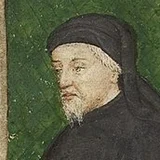
Geoffrey Chaucer
Wrote The Canterbury Tales, a series of poems about pilgrims travelling to Canterbury.
William Caxton
The first person in England to print books using a printing press.
John Barbour
Scottish poet who wrote The Bruce about the Battle of Bannockburn.
Elizabeth I and the Stuarts
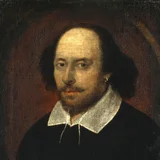
William Shakespeare1564–1616
Born in Stratford-upon-Avon. Widely regarded as the greatest playwright of all time. Plays include Hamlet, Macbeth, Romeo and Juliet, and A Midsummer Night's Dream. The Globe Theatre in London is a modern copy of the theatres where his plays were first performed.
A Global Power
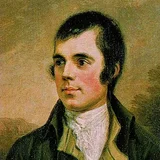
Robert Burns1759–96
Scottish poet known as 'The Bard'. Best known for Auld Lang Syne, sung at Hogmanay (Scottish New Year).
The Victorian Age
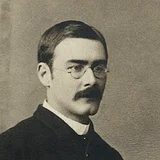
Rudyard Kipling1865–1936
Born in India. Awarded the Nobel Prize in Literature in 1907. Wrote Just So Stories, The Jungle Book and the poem If.
Post-war Britain
Dylan Thomas1914–53
Welsh poet and writer: the radio play Under Milk Wood and the poem Do Not Go Gentle into That Good Night. He died at the age of 39 in New York.
Modern Britain
Roald Dahl1916–90
Born in Wales to Norwegian parents. Served in the RAF. Best known for Charlie and the Chocolate Factory and other children's books.
Fashion, Design and Literature
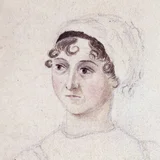
Jane Austen1775–1817
English novelist; Pride and Prejudice, Sense and Sensibility. Explored marriage and family relationships.
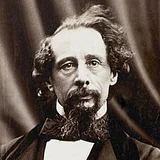
Charles Dickens1812–1870
Oliver Twist, Great Expectations. Scrooge and Mr Micawber have entered everyday language.
Thomas Hardy1840–1928
Author and poet; novels of rural society including Far from the Madding Crowd.
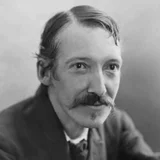
Robert Louis Stevenson1850–1894
Treasure Island, Kidnapped, Dr Jekyll and Mr Hyde.
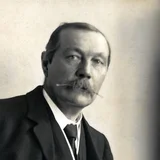
Sir Arthur Conan Doyle1859–1930
Scottish doctor and writer; created Sherlock Holmes, one of the first fictional detectives.
Evelyn Waugh1903–1966
Satirical novelist; best known for Brideshead Revisited.
Graham Greene1904–1991
Novelist influenced by religious beliefs; Brighton Rock, The Heart of the Matter.
Sir Kingsley Amis1922–1995
English novelist and poet; most well-known novel is Lucky Jim.
Dame Agatha Christie
Detective stories, read all over the world.
Ian Fleming
James Bond.
JRR Tolkien
The Lord of the Rings, voted the country's best-loved novel in 2003.
J K Rowling1965–
Author of the Harry Potter series, which achieved huge international success.
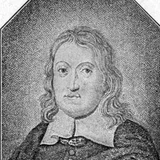
John Milton
Paradise Lost, inspired by his Protestant religious views.
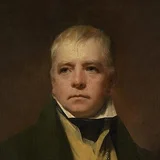
Sir Walter Scott
Poems and novels inspired by Scotland and the stories and songs of the Scottish borders.
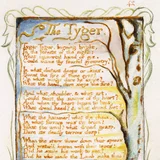
William Blake
The Tyger: 'Tyger! Tyger! burning bright / In the forests of the night…'
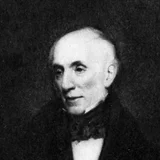
William Wordsworth1770–1850
Poet inspired by nature; 'I wander'd lonely as a cloud' (The Daffodils).
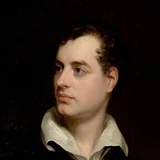
Lord Byron
She Walks in Beauty: 'She walks in beauty, like the night…'
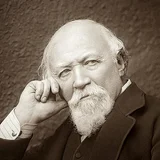
Robert Browning
Home Thoughts from Abroad: 'Oh, to be in England now that April's there…'
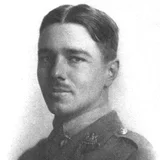
Wilfred Owen1893–1918
WWI poet; Anthem for Doomed Youth — 'What passing-bells for these who die as cattle?'.
Siegfried Sassoon
WWI poet who wrote about his experiences in the trenches.
Artists, architects and designers
Painters by what they painted, architects by their buildings, and designers by what they made.
Art and Architecture
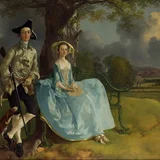
Thomas Gainsborough1727–1788
Portrait painter who placed subjects in country or garden scenery.
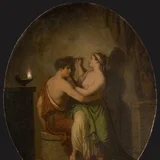
David Allan1744–1796
Scottish portrait painter; best known for The Origin of Painting.
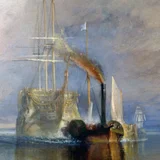
Joseph Turner1775–1851
Influential landscape painter who raised the profile of landscape painting. The Turner Prize is named after him.
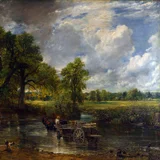
John Constable1776–1837
Landscape painter famous for scenes of Dedham Vale, Suffolk–Essex border.
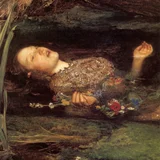
The Pre-Raphaelites (Holman Hunt, Dante Gabriel Rossetti, Sir John Millais)
Second half of the 19th century: detailed religious or literary scenes in bright colours.
Sir John Lavery1856–1941
Northern Irish portrait painter who painted the Royal Family.
Henry Moore1898–1986
English sculptor best known for large bronze abstract works.
John Petts1914–1991
Welsh artist known for engravings and stained glass.
Lucian Freud1922–2011
German-born British artist best known for portraits.
David Hockney1937–2026
Important contributor to the pop art movement of the 1960s.
Since the handbook: he died in June 2026.
Damien Hirst
A previous winner of the Turner Prize.
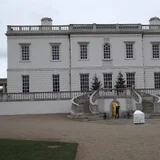
Inigo Jones
17th-century architect; designed Queen's House at Greenwich and Banqueting House in Whitehall.
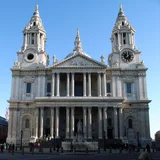
Sir Christopher Wren
Designed the new St Paul's Cathedral in a British version of ornate European style.
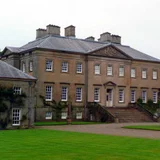
Robert Adam
Scottish 18th-century architect; Dumfries House, influenced Bath's Royal Crescent.
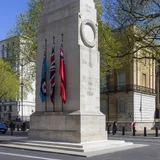
Sir Edwin Lutyens
20th-century architect influential throughout the British Empire: designed New Delhi and many war memorials, including the Cenotaph in Whitehall.
Sir Norman Foster1935–
Modern architect working worldwide.
Lord (Richard) Rogers1933–2021
Modern architect working worldwide.
Dame Zaha Hadid1950–2016
Iraqi-British architect; one of the leading modern architects working on major projects worldwide.
Lancelot 'Capability' Brown
18th-century landscape designer who made grounds appear natural with grass, trees and lakes.
Gertrude Jekyll
Garden designer who created colourful gardens, often collaborating with Lutyens.
Fashion, Design and Literature
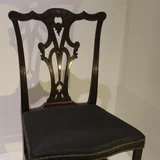
Thomas Chippendale
18th-century furniture.
Clarice Cliff
Art Deco ceramics.
Sir Terence Conran
20th-century interior design.
Mary Quant, Alexander McQueen and Vivienne Westwood
Leading fashion designers of recent years.
Image credits: Colin Smith (2012), CC BY-SA 2.0, via Wikimedia Commons; Sjiong, CC BY-SA 3.0, via Wikimedia Commons; Gordon Brown (2008), CC BY-SA 2.0, via Wikimedia Commons; Mramorak, CC BY-SA 4.0, via Wikimedia Commons.
Jump to another groupMusic, stage and film
Composers and their works, the stage, and British films with their directors.
Music and Theatre
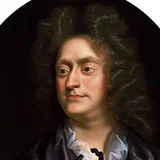
Henry Purcell1659–1695
Organist at Westminster Abbey who developed a distinctly British style of Baroque music.
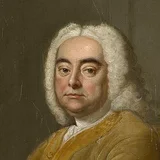
George Frederick Handel1695–1759
German-born composer; British citizen in 1727. Water Music for George I, Music for the Royal Fireworks for George II, and the oratorio Messiah, often sung at Easter.
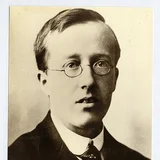
Gustav Holst1874–1934
Composed The Planets suite; adapted Jupiter as I Vow to Thee My Country.
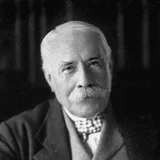
Sir Edward Elgar1857–1934
Born in Worcester. Pomp and Circumstance Marches; Land of Hope and Glory played at Last Night of the Proms.
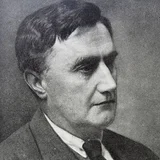
Ralph Vaughan Williams1872–1958
Composed orchestral and choral music strongly influenced by English folk traditions.
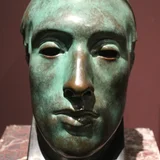
Sir William Walton1902–1983
Wrote Facade and Belshazzar's Feast; composed coronation marches for George VI and Elizabeth II.
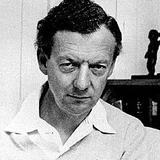
Benjamin Britten1913–1976
Opera composer (Peter Grimes, Billy Budd); wrote A Young Person's Guide to the Orchestra; founded Aldeburgh festival.
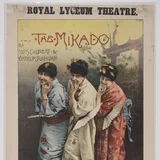
Gilbert and Sullivan
19th-century comic operas poking fun at popular culture and politics: HMS Pinafore, The Pirates of Penzance and The Mikado.
Andrew Lloyd Webber
Shows popular worldwide: Jesus Christ Superstar and Evita (both with Tim Rice), Cats and The Phantom of the Opera.
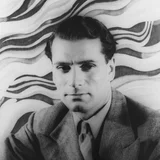
Sir Laurence Olivier
Known for Shakespeare roles; the Laurence Olivier Awards for theatre are named after him.
Film and Comedy
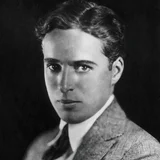
Charlie Chaplin
British actor famous for silent movies and his tramp character; made career in Hollywood.
Sir Alexander Korda
With Alfred Hitchcock, one of the eminent British directors of the 1930s.
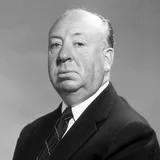
Sir Alfred Hitchcock1899–1980
Eminent British director of the 1930s who later left for Hollywood and remained an important film director until his death in 1980.
Sir David Lean
Brief Encounter (1945) and Lawrence of Arabia (1962); found great success in the UK and internationally.
Carol Reed
The Third Man (1949).
Frank Launder
The Belles of St Trinian's (1954).
Ken Russell
Women in Love (1969).
Nicolas Roeg
Don't Look Now (1973).
Hugh Hudson
Chariots of Fire (1981).
Roland Joffé
The Killing Fields (1984).
Mike Newell
Four Weddings and a Funeral (1994).
Kevin Macdonald
Touching the Void (2003).
Ridley Scott
Found great success in the UK and internationally.
Nick Park
Britain is still strong in animation and special effects: Park has won four Oscars for animated films, including three for Wallace and Gromit.
Colin Firth, Sir Anthony Hopkins, Dame Judi Dench, Kate Winslet and Tilda Swinton
Recent British actors to have won Oscars.
Sportspeople
Champions and record-breakers, each with the sport and the achievement the test asks about.
Post-war Britain
Mary Peters1939–
Born in Manchester, moved to Northern Ireland as a child and won an Olympic gold medal in the pentathlon in 1972. She was made a Dame in 2000.
Sport
Dr Sir Ludwig Guttman
German refugee who pioneered treatment for spinal injuries at Stoke Mandeville hospital and inspired the creation of the Paralympic Games.
Sir Francis Chichester
First to sail single-handed around the world via the Cape of Good Hope and Cape Horn, 1966/67.
Sir Robin Knox-Johnston
Two years later, the first to sail single-handed around the world without stopping.
Damon Hill, Lewis Hamilton and Jenson Button
British Formula 1 world champions.
Since the handbook: Lando Norris became Britain's latest Formula 1 world champion in 2025. The handbook names Hill, Hamilton and Button.
Notable British Sportsmen and Women
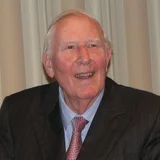
Sir Roger Bannister1929–2018
First man in the world to run a mile in under four minutes, in 1954.
Sir Jackie Stewart1939–
Scottish racing driver who won the Formula 1 world championship three times.
Bobby Moore1941–1993
Captained the English football team that won the World Cup in 1966.
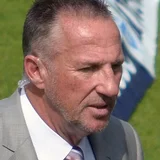
Sir Ian Botham1955–
Captained the English cricket team and held English Test records for both batting and bowling.
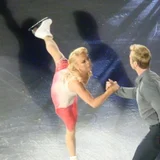
Jayne Torvill and Christopher Dean
Olympic ice-dancing gold in 1984 and four consecutive world championships.
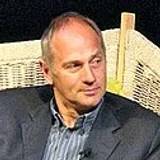
Sir Steve Redgrave1962–
Rowing gold medals at five consecutive Olympic Games; one of Britain's greatest Olympians.
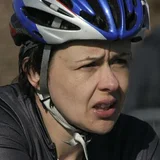
Baroness Tanni Grey-Thompson1969–
Wheelchair athlete: 16 Paralympic medals, including 11 gold, over five Paralympic Games. Won the London Marathon six times and broke 30 world records.
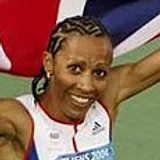
Dame Kelly Holmes1970–
Two Olympic gold medals for running in 2004; held British and European records.
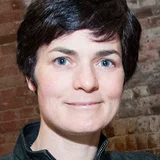
Dame Ellen MacArthur1976–
Yachtswoman who in 2004 became the fastest person to sail around the world single-handed.
Since the handbook: Ellen MacArthur's record voyage finished in February 2005, and the record was beaten in 2008.
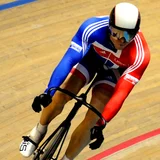
Sir Chris Hoy1976–
Scottish cyclist: six Olympic gold medals and one silver, plus 11 world championship titles.
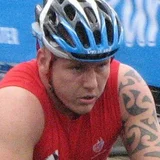
David Weir1979–
Wheelchair athlete: six Paralympic gold medals over two Games; won the London Marathon six times.
Since the handbook: David Weir has now won the London Marathon eight times.
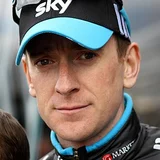
Sir Bradley Wiggins1980–
First Briton to win the Tour de France, in 2012. Won eight Olympic medals, with gold in 2004, 2008, 2012 and 2016.
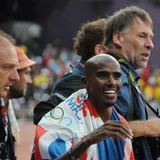
Sir Mo Farah1983–
Distance runner born in Somalia. Olympic gold in the 5,000 and 10,000 metres in 2012 and 2016; the first Briton to win Olympic 10,000 metres gold.
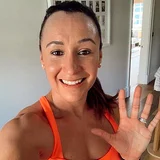
Dame Jessica Ennis-Hill1986–
Olympic heptathlon gold in 2012 and silver in 2016 (seven track and field events); holds British athletics records. Competed as Jessica Ennis in 2012.
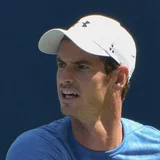
Sir Andy Murray1987–
Scottish tennis player. Won the 2012 US Open, the first British man to win a Grand Slam singles title since 1936; Wimbledon in 2013 and 2016; Olympic gold and silver in 2012 and gold in 2016.
Since the handbook: Andy Murray retired from tennis in 2024.
Ellie Simmonds1994–
Swimming gold at the 2008, 2012 and 2016 Paralympic Games; holds world records; the youngest member of the British team in 2008.
Image credits: Pruneau (2009), CC BY-SA 3.0, via Wikimedia Commons; Dan Smith (2005), CC BY-SA 2.0, via Wikimedia Commons; Eric Koch for Anefo (1969), CC BY-SA 3.0 NL, via Wikimedia Commons; Nic Redhead (2013), CC BY-SA 2.0, via Wikimedia Commons; vagueonthehow (2011), CC BY 2.0, via Wikimedia Commons; Phil Guest / MachoCarioca, CC BY-SA 2.0, via Wikimedia Commons; rjp (2005), CC BY-SA 2.0, via Wikimedia Commons; Russell Garner (2004), CC BY-SA 2.0, via Wikimedia Commons; Bryan Ledgard (2013), CC BY 2.0, via Wikimedia Commons; johnthescone (2008), CC BY 2.0, via Wikimedia Commons; SNappa2006 (2010), CC BY 2.0, via Wikimedia Commons; Petit Brun (2011), CC BY-SA 2.0, via Wikimedia Commons; Tab59 (2012), CC BY-SA 2.0, via Wikimedia Commons; RunForHeroes (2020), CC BY-SA 4.0, via Wikimedia Commons; Carine06 (2018), CC BY-SA 2.0, via Wikimedia Commons.
Jump to another group